

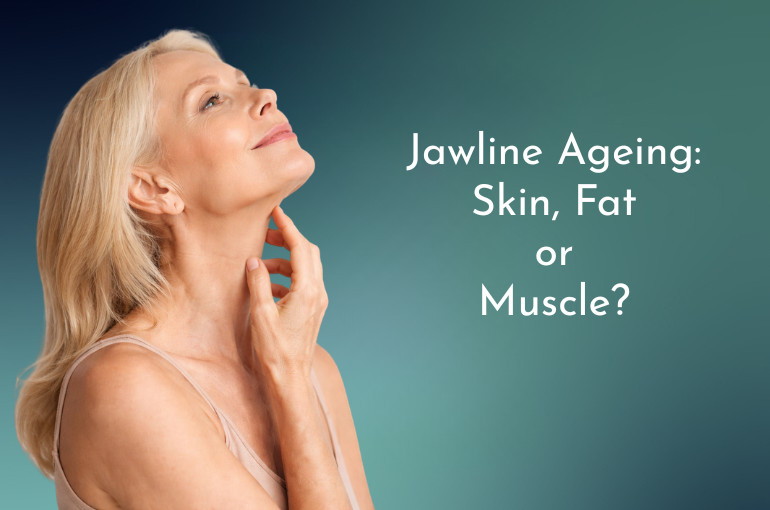
Jawline Ageing: Skin, Fat or Muscle?
If you have been asking what causes jawline sagging, you are not alone. The jawline is one of the first areas of the face to lose definition, and many people notice a saggy jawline, saggy jawlines, or sagging jowls even when the rest of the face still looks relatively youthful.
Jawline ageing can be confusing because it does not have a single cause. Some people assume it is purely sagging skin, while others believe it is due to weight gain, loss, or lifestyle factors such as smoking or sun exposure. In reality, facial sagging along the jawline is usually the result of changes occurring at multiple levels of the face during the natural ageing process.
This guide explains the role of skin, fat, and muscle in jawline ageing, and why understanding the true cause is essential for effective, non-surgical treatments.
The Jawline Is a Structural Area
The jawline relies on strong underlying support to remain sharp and defined. It is shaped by facial bone structures, supported by fat and muscle, and covered by skin that needs firmness, hydration, and skin elasticity to hold everything in place.
As we age, collagen production and elastin decline, facial tissues thin, and support weakens. When changes occur at one or more levels, the jawline can begin to blur, creating jowls, sagging jowls, heaviness, or loss of definition along the jawline and neck skin.
This is why jawline ageing rarely responds well to a single, surface-level treatment or skincare approach.
How Skin Changes Affect the Jawline
Skin laxity plays a significant role in jawline sagging.
Over time, collagen production slows and elastin fibres weaken, reducing the skin’s ability to resist gravity. Factors such as UV exposure, sun damage, sunlight, smoking, and cumulative exposure to UV rays accelerate this process. As skin elasticity declines, the skin begins to drape over the jawline rather than sitting tightly against it.
This often leads to softening along the jawline, early sagging jowls, and changes in neck skin, even in people who have not gained weight. Skin quality alone can dramatically influence whether the jawline looks defined or saggy.
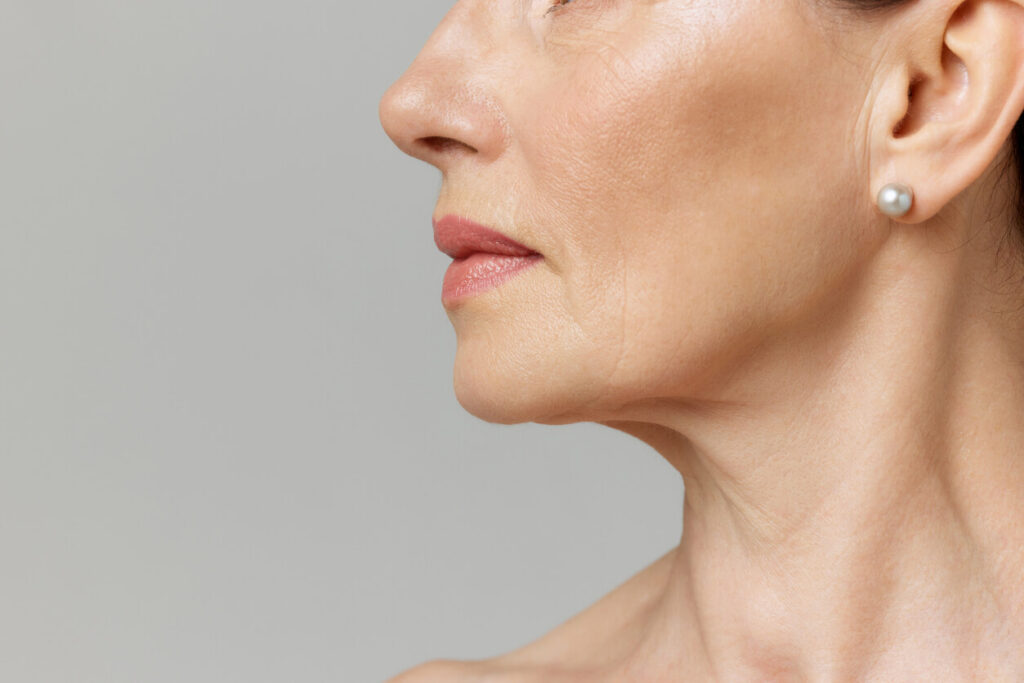
The Role of Fat in Jawline Sagging
Fat distribution is another important contributor to jawline ageing.
Rather than disappearing completely, facial fat often shifts downward during the ageing process. Fat pads from the midface can descend and collect along the jawline, contributing to Jowls, saggy jawlines, and heaviness in the lower face. This can also make features such as nasolabial folds more pronounced.
At the same time, fat loss in areas like the cheeks reduces lift and support. This imbalance between volume loss and volume descent is a key reason many people develop a saggy jawline without weight change.
Muscle Changes and Jawline Definition
Facial muscles play a key role in how the jawline sits at rest.
Over time, repeated facial movement and muscle imbalance can pull the lower face downward. Some muscles become overactive, while others weaken. This contributes to facial sagging and reduced jawline definition.
While facial exercises are often discussed, their impact is limited compared to targeted non-surgical treatments. When muscle support declines, even hydrated skin and balanced fat distribution may not be enough to maintain a sharp jawline.
Professional Guidance Matters
At Dermoperfection, jawline rejuvenation begins with detailed facial analysis to ensure safe, personalised treatment plans that restore definition while maintaining natural balance.
Why Jawline Sagging Is Rarely One Thing
When people ask what causes jawline sagging, the answer is rarely skin or fat or muscle alone.
In most cases, jawline ageing involves a combination of reduced collagen production, loss of skin elasticity, fat redistribution, muscle imbalance, and changes to facial bone structures. Together, these factors lead to sagging jowls and loss of definition.
This is why treatments that focus on only one layer often produce limited or short-lived results.
Treating the Cause, Not Just the Appearance
Effective jawline rejuvenation depends on identifying what is actually driving the change.
If skin laxity is the main issue, skin tightening and skin rejuvenation treatments such as radiofrequency treatments, microneedling with radiofrequency, laser resurfacing, or skin peels may help. If volume shift is contributing, carefully placed dermal fillers containing hyaluronic acid may restore support. If muscle imbalance plays a role, options such as anti-wrinkle injections or botox injections may be appropriate.
Treating the wrong layer can lead to disappointing outcomes or results that look unnatural, heavy, or poorly balanced.
The Importance of Assessment
Jawline ageing looks different on every face.
A professional assessment considers skin quality, collagen levels, fat distribution, muscle activity, facial tissues, and overall structure. This ensures personalised treatment plans are created using appropriate non-surgical treatments rather than a generic approach.
Without this step, jawline treatments often become guesswork rather than targeted rejuvenation.
When Non-Surgical Options Can Help
For many people, jawline sagging can be improved without surgery, including traditional facelift or neck lift procedures.
Modern non-surgical treatments may include skin tightening, thread lifts, dermal filler injections, botox injections, microneedling, chemical peels, laser resurfacing, or non surgical sagging jowl lifts, depending on the underlying cause.
Results are typically subtle and progressive, improving definition while maintaining natural facial expression and avoiding the risks associated with surgery.
The Dermoperfection Approach
At Dermoperfection, jawline ageing is approached with precision and restraint.
Each face is assessed for skin behaviour, collagen production, volume changes, muscle balance, and overall structure before any treatment is recommended. The focus is on restoring definition, improving skin elasticity, and supporting youthful contours without overtreatment.
Concerned About Jawline Sagging?
If you are wondering what causes jawline sagging in your face specifically, understanding the underlying cause is the most important first step.
A professional assessment can determine whether skin, fat, muscle, or a combination of factors is driving change, allowing treatment to be planned safely and effectively for natural-looking, balanced results without surgery.