

What Causes Facial Sagging If You Haven’t Lost Weight?
If you have been wondering what causes facial sagging despite your weight staying the same, you are not imagining it. A sagging face often develops gradually, without any obvious trigger such as weight loss or illness.
When there have been no major changes to lifestyle or body weight, facial sagging can feel confusing. The reality is that it is driven by internal skin changes and structural shifts that occur naturally over time.
This guide explains what really causes facial sagging when weight loss is not the reason.
Facial Sagging Is Not Just About Weight
Many people assume sagging skin is caused by losing fat in the face. While weight loss can contribute in some cases, it is far from the only cause of a sagging face.
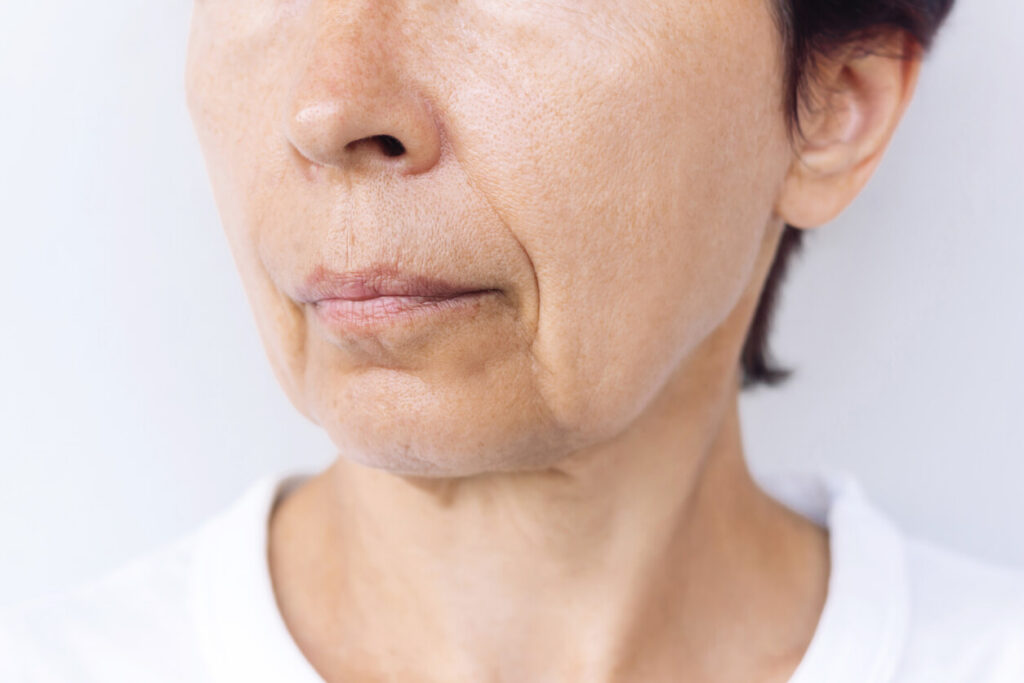
Facial ageing is a complex process involving the skin, fat, muscle, bone, and deeper facial tissues. Even if your weight is stable, changes within these layers can still lead to sagging jowls, a double chin, softened jawlines, and loss of definition.
In most cases, facial sagging is caused by reduced structural support and declining skin elasticity, rather than changes on the scales. Addressing these layered changes is central to any effective non-surgical facelift treatment plan.
Collagen and Elastin Breakdown
One of the most significant answers to what causes facial sagging is reduced collagen production and elastin breakdown.
Collagen provides structure and firmness, while elastin allows the skin to stretch and return to its original position. From our mid twenties onwards, natural collagen production slows. Over time, this leads to skin that feels thinner, looser, and less resilient, with reduced elasticity.
As collagen and elastin decline, the skin becomes less able to support itself against gravity. This results in sagging skin around the cheeks, jawline, neck, and lower face, even when body weight remains unchanged.
Skin Laxity and Loss of Firmness
Skin laxity refers to reduced tightness and elasticity. It is one of the earliest contributors to sagging skin and often develops gradually.
Factors such as sun exposure, UV damage, and cumulative exposure to UV rays weaken the skin’s supportive fibres. As the skin loses firmness, it begins to drape rather than sit smoothly over the facial structure.
This is why some people notice sagging jowls, softened jawlines, or a heavier lower face without any change in facial fat volume. Reduced firmness can also affect the neck, sometimes prompting patients to ask about surgery when skin quality is the underlying issue.
Changes in Facial Fat Pads
Even when overall weight is stable, the fat pads in the face naturally change with age.
Rather than disappearing completely, facial fat tends to shift downward. Cheek fat pads can descend, contributing to heaviness in the lower face, deeper nasolabial folds, and visible marionette lines, while the upper face may appear flatter.
This redistribution of volume alters facial balance and is a major reason a sagging face can develop without weight loss. The face may appear fuller in some areas while losing lift and contour in others.
Muscle Changes Over Time
Facial muscles play an important role in how the face sits at rest.
Over time, repeated muscle movement and changes in muscle tone can pull the face downward. Some muscles become overactive, while others weaken. This imbalance contributes to sagging around the mouth, jawline, and lower face, and can also influence features such as drooping eyelids.
Advanced muscle stimulation treatments such as EMFACE facial muscle toning work by strengthening and balancing key facial muscles, supporting lift from beneath the skin without adding volume. These deeper structural changes are often overlooked when people assume sagging is purely a skin issue.
These muscular changes occur slowly, which is why facial sagging can feel sudden even though it has been developing for years.
Professional Guidance Matters
At Dermoperfection, treatment plans are created following detailed facial analysis, ensuring any approach is safe, personalised, and focused on natural, balanced results.
Bone Structure and Ageing
Another lesser known cause of facial sagging is subtle bone resorption.
As we age, facial bones gradually lose density and projection. This reduces the underlying framework that supports the skin and soft tissue.
When the structure beneath the skin changes, the skin has less to anchor to. This can result in a softer, more sagging face even if skin quality is good and weight has not changed.
Hormonal and Lifestyle Factors
Hormonal changes, particularly during periods such as perimenopause and menopause, can accelerate collagen loss and affect overall skin health.
Lifestyle factors also play a role. Chronic stress, poor sleep, smoking, lack of sun protection, and prolonged sun exposure all contribute to faster breakdown of collagen and elastin.
These influences affect skin quality and firmness rather than fat levels, which is why sagging skin can develop independently of weight change.
Why Facial Sagging Often Appears Gradually
Facial sagging rarely happens overnight. It is usually the result of small changes accumulating over time.
Because these changes affect multiple layers of the face, people often notice a general loss of definition rather than one specific issue. This is why treating a sagging face effectively requires a comprehensive understanding of facial structure and skin behaviour.
Can Facial Sagging Be Treated Without Surgery?
Yes, in many cases facial sagging can be improved without surgery or a traditional face lift.
The key is identifying what is causing the sagging. Skin laxity, volume shift, muscle activity, and collagen loss each require a different approach. Treating the wrong layer often leads to disappointing results.
Modern non-surgical and non-invasive treatments may include skin tightening technologies, laser resurfacing, anti-wrinkle injections, dermal fillers, or combination approaches tailored to restore structural support rather than simply masking surface changes.
The Importance of Professional Assessment
Understanding what causes facial sagging in your face specifically is essential before starting any treatment.
A professional assessment looks beyond the surface and considers skin quality, facial anatomy, muscle activity, volume distribution, and structural support. This allows personalised treatment plans to be created safely and effectively.
The Dermoperfection Approach
At Dermoperfection, facial sagging is approached with precision and restraint. Treatments are chosen based on how your skin behaves and ages, not on trends or assumptions.
The focus is on restoring balance, supporting natural structure, and improving skin quality so results look refined and natural rather than overtreated.
Concerned About Facial Sagging?
If you are noticing sagging skin but have not lost weight and are unsure why, understanding the cause is the first step.
A consultation can help identify what is driving changes in your face and whether a personalised non-surgical lifting plan can help restore firmness, definition, and confidence over time.