

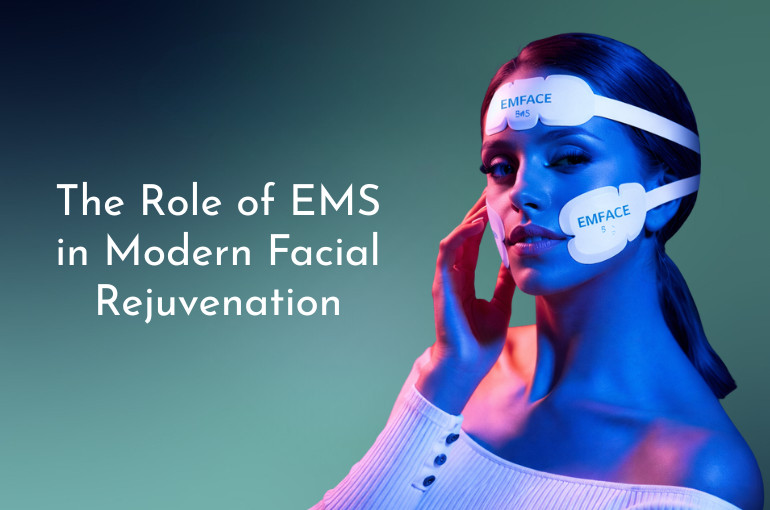
The Role of EMS in Modern Facial Rejuvenation
If you have been researching EMS facial rejuvenation, you may be curious about how Electrical Muscle Stimulation fits into modern non-surgical facial aesthetics. As energy-based technologies evolve, skin rejuvenation is no longer limited to treatments that focus on the skin alone. Increasingly, attention is turning to the muscles that support the face beneath the surface.
EMS, also referred to as Facial Electrical Muscle Stimulation, is becoming an important part of facial rejuvenation strategies, particularly for patients who notice changes in facial position, contour, or definition rather than surface texture alone.
This guide explains the role of EMS in modern facial rejuvenation, how it works, and why muscle support is now recognised as a key component of advanced non-surgical facelift treatments.
Facial Rejuvenation Is More Than Skin Deep
For many years, facial rejuvenation focused primarily on the skin. Treatments were designed to improve texture, reduce wrinkles, and stimulate collagen and elastin production. While these approaches remain valuable, they do not address every aspect of facial ageing.
The face is supported by multiple layers. Skin sits on top, beneath it lies fat and connective tissue, and below that are the facial muscles and bone. As we age, changes occur at all of these levels. Skin elasticity and firmness decline, volume shifts, and muscle tone and balance alter over time.
When facial muscles weaken or lose coordination, the face can begin to sit lower at rest. This can lead to heaviness in the lower face, softening of contours, and reduced definition, even when skin quality and skincare products are well maintained.
This is where EMS plays a distinct role.
What Is EMS Facial Rejuvenation?
EMS facial rejuvenation uses controlled electrical impulses to stimulate the facial muscles. These impulses cause targeted muscle contractions, similar to those that occur during natural facial movement, but delivered in a precise and consistent way using clinically approved devices.
Advanced systems such as EMFACE muscle stimulation technology combine muscle activation with supportive skin tightening, making them particularly relevant in modern lifting protocols.
Unlike treatments that work only on the skin surface, facial muscle toning treatments target the muscles responsible for facial support. By engaging these muscles repeatedly, EMS can help improve muscle tone, strength, and balance while supporting facial toning from within.
The aim is not to freeze movement or alter expression, but to support the face from beneath, improving how it holds itself at rest and enhancing natural facial aesthetics.
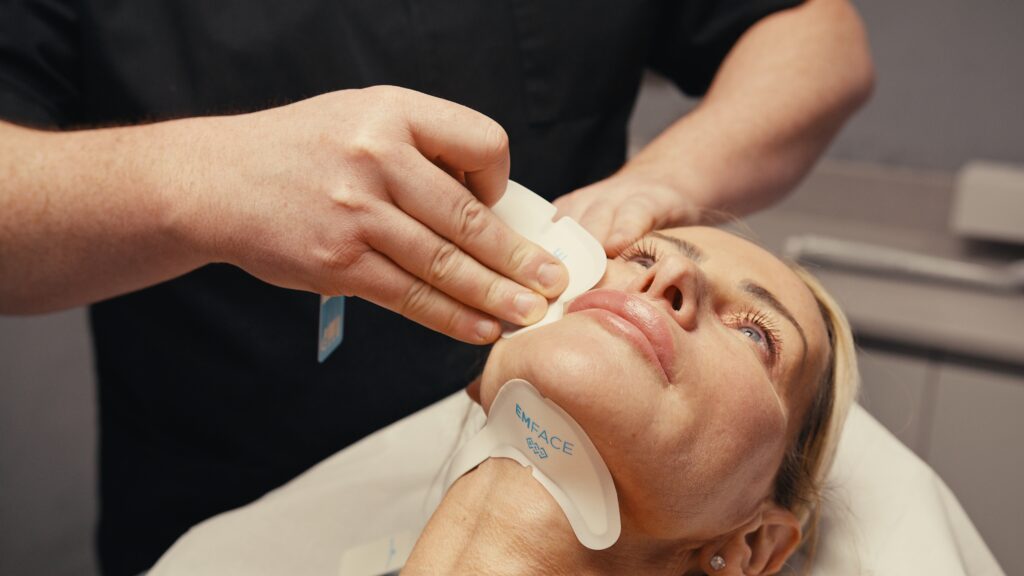
How EMS Works on the Face
EMS devices deliver low-level electrical stimulation through the skin to activate specific muscle groups. A conductive gel is applied to ensure even energy transfer, reduce skin irritation, and protect the skin barrier during treatment.
The impulses are carefully calibrated to suit facial anatomy, which differs significantly from the muscles of the body. Treatment time and intensity are controlled according to a defined protocol.
During treatment, muscles contract and relax in a controlled pattern. Over time, this repeated activation can help strengthen weakened muscles, improve coordination between opposing muscle groups, and support improved blood circulation and lymphatic drainage.
As muscle tone improves, the face may appear more lifted, supported, and defined. This can be particularly noticeable in areas such as the cheeks, jawline, and lower face.
Importantly, EMS does not physically pull the skin or add volume. Its effect comes from improving muscular support and encouraging healthy circulation beneath the skin.
Why Muscle Support Matters in Facial Ageing
Facial ageing is often associated with sagging skin, but muscle changes play a significant role in how the face looks over time.
Some muscles become overactive and pull the face downward, while others weaken and lose their lifting ability. This imbalance contributes to heaviness, drooping, and loss of contour.
Skin-based treatments alone cannot correct these underlying muscle changes. Even with good skin quality and skincare, the face may still appear tired or unsupported if muscle tone has declined.
EMS addresses this deeper layer of ageing directly, making it a valuable component of modern facial rejuvenation.
Professional Guidance Matters
At Dermoperfection, EMS treatments are delivered following detailed facial analysis to ensure safe, balanced, and natural-looking results.
EMS Compared to Traditional Facial Rejuvenation Treatments
EMS facial rejuvenation differs from other non-surgical treatments in both its target and its effect.
Skin tightening treatments focus on collagen and elastin production within the skin to improve firmness and elasticity. Injectable treatments focus on restoring volume or relaxing specific muscles. Skin quality treatments improve texture, hydration, and tone.
EMS focuses specifically on muscle tone, support, and facial structure. It does not replace other aesthetic procedures, but it complements them.
For patients whose primary concern is facial drooping, loss of definition, or reduced muscle support rather than fine lines or surface texture, EMS may offer outcomes that skin-focused treatments alone cannot achieve.
The Role of EMS in Combination Treatment Plans
Modern facial rejuvenation rarely relies on a single treatment. The most natural and balanced results are often achieved through combination approaches.
EMS can be integrated into treatment plans alongside skin tightening, skin quality treatments, or structural support, depending on individual needs. By addressing muscle support as well as skin and structure, results tend to look more harmonious and stable.
This layered strategy reflects the principles behind a comprehensive non-surgical facelift approach, where each layer of ageing is treated appropriately rather than in isolation.
Who May Benefit Most From EMS Facial Rejuvenation?
EMS facial rejuvenation may be particularly suitable for patients who notice changes in facial position, heaviness, or contour rather than primarily surface concerns.
It is often considered by individuals who want lift and definition without injectables, or by those looking to support and maintain results from other non-surgical facial toning or skin rejuvenation treatments.
As with any aesthetic procedure, suitability depends on individual facial anatomy, muscle behaviour, and overall skin health. A professional consultation is essential to determine whether EMS is appropriate and how it should be used.
Safety and Professional Application
When delivered using clinically approved devices and appropriate protocols, EMS facial rejuvenation is considered safe for suitable patients.
Because the face contains many small and specialised muscles, treatment should always be performed by trained professionals who understand facial anatomy and muscle function. Correct placement, treatment time, intensity, and aftercare are key to achieving balanced results and avoiding unnecessary skin irritation.
The Dermoperfection Approach
At Dermoperfection, EMS facial rejuvenation is used as part of a considered, assessment-led approach to facial ageing.
Rather than following trends, the focus is on understanding how each face is changing and selecting advanced treatments that support natural structure, balance, and long-term skin health. EMS may be incorporated where muscle support, facial toning, or circulation is a contributing factor, always as part of a personalised protocol.
The aim is refined, natural-looking rejuvenation that enhances facial harmony rather than forcing change.
Considering EMS Facial Rejuvenation?
If you are exploring EMS facial rejuvenation and want to understand whether Electrical Muscle Stimulation has a role in your treatment plan, professional assessment is the most important first step.
Understanding how your facial muscles, skin, circulation, and structure interact allows treatments to be chosen safely and effectively, supporting rejuvenation that looks natural, balanced, and aligned with how your face ages over time.