
Skin Tightening vs Muscle Toning: What Lifts the Face More?

If you have been researching skin tightening vs muscle toning face, you are likely trying to understand which approach actually delivers the most visible lift. It is a common question for people who feel their face looks lower, softer, or less defined due to skin ageing, sagging skin, or early wrinkles.

Skin tightening and muscle toning are often grouped together, but they work in very different ways. One focuses on improving skin firmness and elasticity, while the other targets the muscles that support the face beneath the surface.

This guide explains the difference between skin tightening and muscle toning, how each works, and which approach is more effective depending on what is causing changes in your face.

Understanding What Actually Lifts the Face

To understand skin tightening vs muscle toning face, it helps to look beneath the surface of the facial skin and underlying structures.

The face is supported by multiple layers. The skin sits on top, beneath that is fat and connective tissue, and below that are the facial muscles, deeper muscles, and bone. Ageing affects each layer differently. Skin loses elasticity and smooth texture, collagen and elastin decline, muscle tone and muscle thickness change, and structural support gradually weakens.

True lifting treatments, including advanced non-surgical facelift options, work by identifying which of these layers is responsible for changes such as jowls, reduced jawline definition, loss of cheek volume, increased jowl volume, a double chin, or changes in the periorbital area.

Lifting the face is rarely about treating just one layer. It is about precision.

What Skin Tightening Treatments Do

Skin tightening treatments focus on improving firmness and elasticity within the skin itself, supporting overall facial rejuvenation and skin health.

These treatments work by stimulating collagen and elastin production in the deeper layers of the skin. Controlled heat or energy, including radio frequency, RF energy, HIFU, and other energy-based cosmetic methods, triggers a repair response that encourages collagen renewal over time.

As collagen regenerates, the skin becomes firmer, smoother, and more resilient. This can improve looseness around the jawline, lower face, neck, and wider facial surface area, helping reduce visible wrinkles, early jowls, and surface irregularities caused by UV exposure.

Skin tightening improves how well the skin holds itself against gravity, but it does not actively lift muscles, increase muscle thickness, or reposition deeper facial structures.

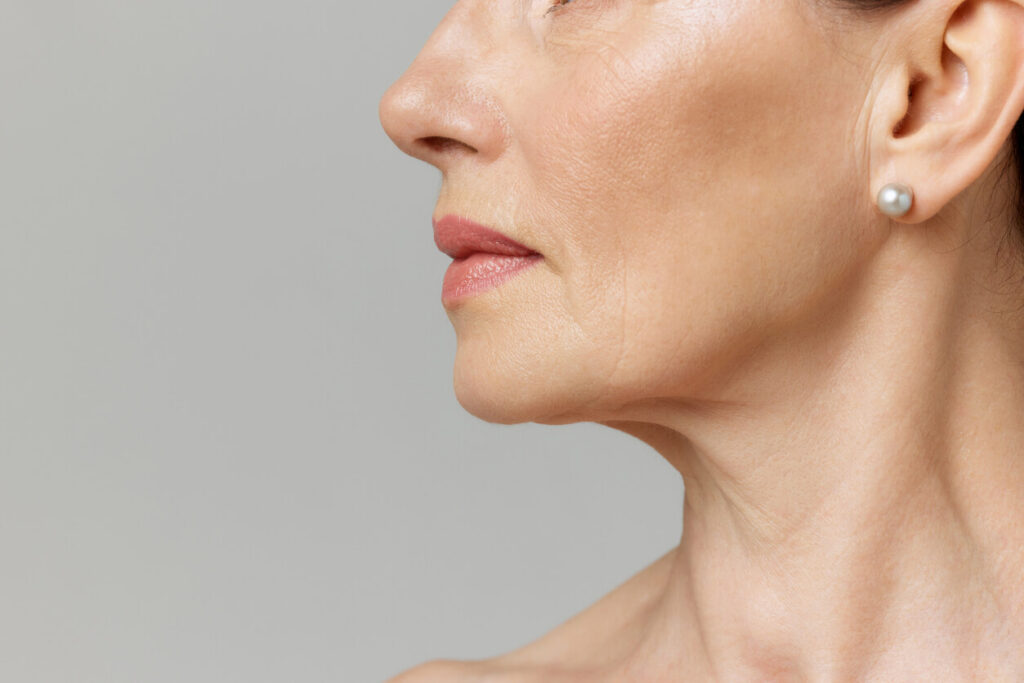
ageing skin

What Muscle Toning Treatments Do

Muscle toning treatments work at a deeper level, targeting the muscles and facial muscles rather than the skin.

Over time, certain muscles become overactive and pull the face downward, while others weaken and lose lifting strength. This imbalance contributes to heaviness in the lower face, reduced facial volume, softening of facial contours, and loss of jawline definition.

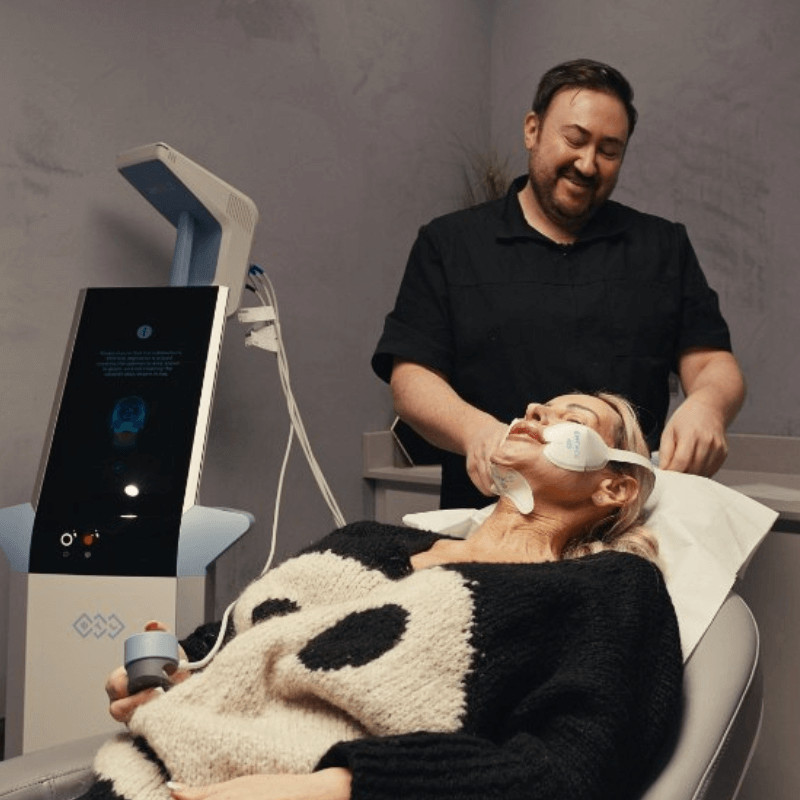
Muscle toning treatments focus on muscle strengthening and improving muscle balance. Technologies such as EMFACE muscle stimulation treatment work to increase muscle thickness, improve tone, and support facial contouring from beneath the skin.

Unlike facial exercises, which offer inconsistent results, these treatments deliver controlled stimulation to the muscles, improving how the face holds itself at rest without relying on repetitive movement.

Skin Tightening vs Muscle Toning Face: The Key Differences

When comparing skin tightening vs muscle toning face, the difference lies in what each treatment targets.

Skin tightening addresses sagging skin, reduced elasticity, surface texture changes, wrinkles, and early laxity. These results are often enhanced when combined with treatments such as microneedling, skin peels, or a targeted chemical peel to improve skin texture and clarity.

Muscle toning addresses muscular support. It improves muscle strength, balance, and thickness, which can reposition the face and sharpen areas such as the jawline even when skin quality is already good.

If skin laxity is the main issue, tightening treatments often deliver noticeable improvement. If the face looks heavy or dropped despite healthy skin, muscle toning may have a greater lifting effect.

Professional Guidance Matters

Choosing between skin tightening and muscle toning should always involve professional assessment. A qualified practitioner can identify whether skin laxity or muscle changes are causing visible concerns.

At Dermoperfection, treatment plans are created following detailed facial analysis to ensure safe, balanced, and natural looking results.

Which One Lifts the Face More?

There is no single answer to which lifts the face more. The effectiveness depends entirely on what is causing the change.

If the primary concern is loose or crepey skin, surface wrinkles, or damage linked to UV exposure, skin tightening treatments are usually the most effective option.

If the concern is facial drooping, heaviness, or loss of contour due to muscle imbalance, reduced muscle thickness, or changes in facial muscles, muscle toning treatments may produce more visible lift.

In many cases, both skin laxity and muscle changes are involved. This is why combining treatments often delivers the most balanced and natural looking results within a comprehensive non-surgical facelift plan.

Why Combination Treatment Often Works Best

Facial ageing rarely affects just one layer. Treating skin without addressing muscle tone may leave lift looking limited. Treating muscle tone without supporting the skin may leave the surface looking loose or uneven.

A combined approach allows improvements in collagen, elastin, muscle support, skin texture, and volume to work together. This creates more harmonious facial contours and longer-lasting results.

This is why every effective treatment plan should be personalised rather than based on trends, devices, or generic cosmetic methods.

What Results Can You Expect

Results vary depending on the treatments chosen and the underlying cause of facial change.

Skin tightening results often develop gradually as collagen rebuilds, with improvements continuing over several weeks or months. Treatments involving radio frequency, microneedling, or HIFU typically involve minimal recovery, depending on the protocol used.

Muscle toning results may appear more quickly as muscle activity changes, though consistency is important for long-term improvement.

The most noticeable improvements are often described as looking fresher, firmer, and more supported rather than dramatically altered.

The Importance of Facial Assessment

Choosing between skin tightening and muscle toning should never be guesswork.

A professional assessment evaluates facial skin, facial muscles, muscle activity, volume distribution, areas such as the jawline, jowls, cheeks, and periorbital area, as well as how the face moves and rests. This ensures the correct layer is treated and avoids unnecessary injectables or poorly matched anti-ageing treatments.

Understanding the cause is more important than choosing the treatment name.

The Dermoperfection Approach

At Dermoperfection, facial lifting treatments are selected based on how your face is changing, not on one size fits all solutions.

Whether a personalised treatment plan includes energy-based skin tightening, muscle toning, dermal fillers containing hyaluronic acid, botox, other injectables, microneedling, skin peels, or supportive skincare routines, the focus remains on safety, balance, and natural-looking results.

Considering Skin Tightening or Muscle Toning?

If you are exploring skin tightening vs muscle toning face and want clarity on what will genuinely lift your face, a consultation is the most important first step.

A personalised assessment can determine whether skin tightening, muscle toning, or a combined approach will deliver the most effective, natural, and sustainable results for you.
Non-Injectable Options for Facial Lifting

If you have been researching non injectable facial lifting, you are not alone. Many patients want visible lift, improved facial contours, and a more youthful appearance without injectable fillers, dermal fillers, needles, or extended downtime. It is a growing area of facial aesthetics, particularly for those exploring non-invasive options before considering cosmetic procedures such as a surgical facelift or thread lift.

Modern facial lifting is no longer limited to surgery or injectable treatments like hyaluronic acid filler, botox, or other botulinum toxin-based procedures. Advances in technology now allow facial rejuvenation using minimally invasive techniques that support the skin, muscles, and deeper structures of the face without injections.

This guide explains the most effective non-injectable options for facial lifting, how they work, and which patients they may be best suited for.

Facial Lifting Is About More Than the Skin

A common misconception is that lifting the face is purely a skin concern. In reality, facial ageing affects multiple layers at once.

Over time, the dermis thins, collagen and elastin production slows, skin elasticity declines, and supportive facial muscles weaken or fall out of balance. Lifestyle factors such as sun damage, stress, and skincare habits also influence sagging skin, fine lines, wrinkles, and overall skin quality.

Effective non-surgical facelift treatments address these layers strategically, improving support and contour without relying solely on injectable fillers or altering natural expressions.

Skin Tightening Treatments

Skin tightening treatments are among the most popular non-invasive options for facial lifting and non-surgical contouring.

These treatments use energy-based technology to gently heat the deeper layers of the dermis, stimulating collagen production and supporting elastin regeneration. As collagen rebuilds over time, skin firmness improves, helping reduce fine lines, wrinkles, and early skin laxity.

Laser skin tightening and radiofrequency technology can be particularly effective for early sagging around the jawline, lower face, neck, and cheeks. Results develop gradually over weeks or months, creating a natural-looking lift rather than sudden change.

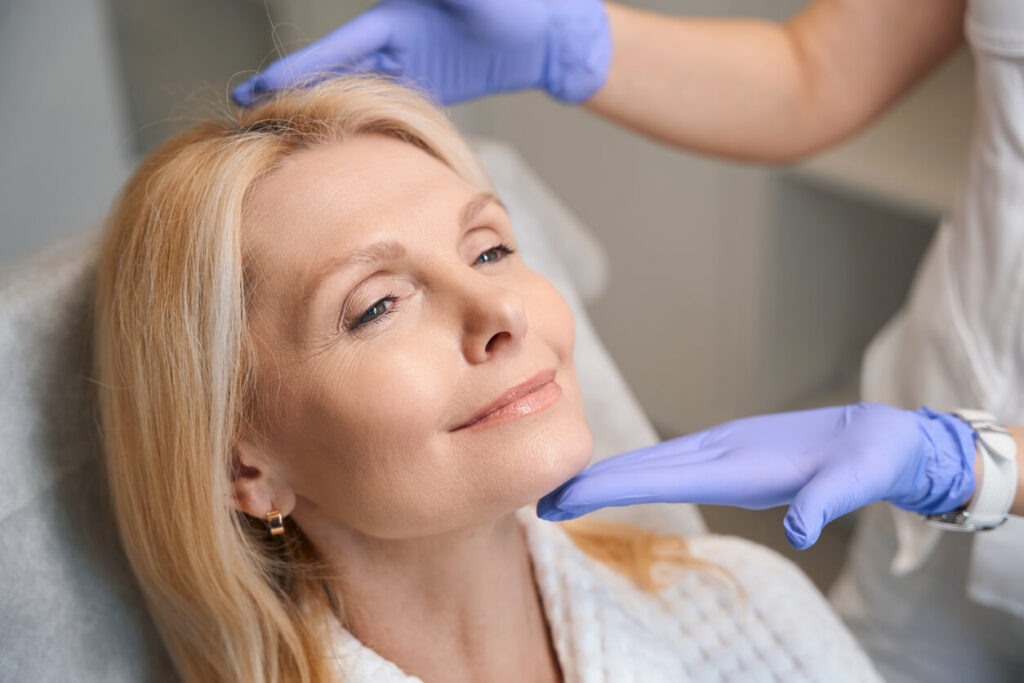
lifting facial

Radiofrequency and Energy-Based Treatments

Radiofrequency and laser-based treatments are commonly used within advanced lifting plans.

By delivering controlled heat, these treatments encourage collagen remodelling and improved elasticity. Options may include laser resurfacing, laser skin tightening, intense pulsed light, or other resurfacing techniques depending on skin type and concerns such as sun damage or uneven tone.

While these treatments do not reposition volume or replace procedures such as fat grafting, they can enhance facial rejuvenation when skin laxity is a key factor.

EMS and Muscle-Based Facial Lifting

Electrical muscle stimulation, or EMS, plays an increasingly important role in non-injectable facial lifting.

Rather than targeting the skin or replacing dermal fillers, EMS focuses on facial muscle toning. As muscles weaken with facial ageing, the face can appear heavier, with reduced definition along the jawline and contours even when skin quality is good.

Technologies such as EMFACE non-injectable muscle lifting use controlled electrical stimulation to activate facial muscles while supporting skin tightening. By strengthening these muscles, EMS supports a lifted appearance at rest and complements other non-surgical contouring approaches.

This option is particularly useful for patients concerned with heaviness or loss of definition rather than volume loss or deep wrinkles.

Professional Guidance Matters

Non-injectable facial lifting should always begin with professional assessment. A qualified practitioner can evaluate skin laxity, muscle tone, and facial structure to select the safest and most effective approach.

At Dermoperfection, every plan is created following detailed facial analysis to ensure balanced, natural-looking results.

Skin Quality Treatments That Support Lift

Although not lifting procedures in isolation, skin quality treatments play an essential role in facial rejuvenation.

Treatments such as chemical peels, microneedling, skincare-led protocols, and laser resurfacing improve hydration, texture, and elasticity. Healthier skin reflects light more evenly, softening the appearance of wrinkles and enhancing overall rejuvenation.

When skin quality is neglected, even well-planned lifting treatments may fail to deliver optimal outcomes.

The Role of Combination Treatment

Non-injectable facial lifting rarely relies on a single procedure.

Skin tightening alone may be insufficient if muscle tone has declined. EMS alone may be limited if skin laxity or dermal thinning is significant. This is why a combination of approaches often delivers the most effective and balanced results.

By addressing skin elasticity, muscle support, and skin quality together, non-injectable treatments can create a visible yet natural-looking lift without injectable fillers, dermal fillers, or surgery.

What Non-Injectable Facial Lifting Cannot Do

It is important to understand the limitations.

Non-injectable options cannot replicate the dramatic repositioning of a surgical facelift, nor can they replace volume where significant hollows exist. They also cannot fully substitute treatments such as hyaluronic acid filler or injectable fillers when structural volume is required.

Results are typically subtle, progressive, and refined, with minimal downtime, swelling, or side effects when performed correctly by a medical professional.

Who Is Non-Injectable Facial Lifting Best Suited For?

Non-injectable facial lifting is often best suited to patients with early to moderate signs of facial ageing who want rejuvenation without injectables or surgery.

It may also appeal to those maintaining results after botox, dermal fillers, or a previous lifting treatment, or patients who prioritise gradual improvement over dramatic change.

A detailed facial assessment and consultation are essential to determine suitability and manage risks, expectations, and planning.

The Importance of Assessment and Planning

Successful non-injectable facial lifting depends far more on assessment than on the treatment name.

Understanding skin type, muscle behaviour, volume distribution, and individual ageing patterns allows a treatment plan to be created safely and effectively. Without this step, results may be disappointing regardless of technique.

The Dermoperfection Approach

At Dermoperfection, non-injectable facial lifting is approached as a layered, assessment-led process rather than a one-size-fits-all solution.

Each patient journey begins with a comprehensive facial assessment and consultation. Treatments are chosen based on skin behaviour, muscle support, and long-term rejuvenation goals rather than trends or assumptions. The aim is always refined, balanced facial rejuvenation with a natural-looking lift and minimal downtime.

Considering Non-Injectable Facial Lifting?

If you are exploring non injectable facial lifting and want clarity on what can realistically be achieved without injectable fillers, Botox, or surgery, professional consultation is the most important first step.

Understanding which non-invasive options suit your facial structure, concerns, and lifestyle ensures any treatment plan is safe, effective, and aligned with long-term facial aesthetics and skin health.

Can You Lift the Face Without Changing How You Look?

If you are searching for a natural looking non surgical facelift, you are likely asking a very specific question. You want lift, definition, and facial rejuvenation, but you do not want to look different, overdone, or unlike yourself.

This is one of the most common concerns people have when exploring non-surgical facial treatments and cosmetic procedures. Many patients are not trying to reverse ageing completely. Instead, they want to address sagging skin, loose skin, and early skin laxity while still looking like themselves.

The good news is that yes, it is possible to lift the face without changing how you look. The key lies in how treatments are chosen, planned, and delivered as part of a carefully considered non-surgical facelift Treatment.

This guide explains how natural looking non-surgical facelifts work, why some treatments change appearance while others do not, and what actually creates subtle, believable lift with high patient satisfaction.

What People Mean by “Changing How You Look”

When people say they do not want to change how they look, they are usually referring to a few specific fears.

These include looking overfilled from dermal fillers, frozen from injectables, unnaturally tight, or losing recognisable facial expressions. Others worry about altering facial contours, midface proportions, or looking like they have “had something done”.

In most cases, these outcomes are not caused by non-surgical treatments themselves, but by how cosmetic procedures are used.

A natural-looking non surgical face lift focuses on restoring balance and support across the face rather than altering identity.

Lifting the Face Is Not About One Treatment

One of the biggest misconceptions is that facial lift comes from a single procedure.

In reality, facial ageing affects multiple layers. Skin loses elasticity as collagen and elastin production slows, facial fat shifts, and muscle tone changes. Skin concerns such as fine lines, crow’s feet, smile lines, frown lines, and nasolabial folds often appear alongside sagging skin.

Treating just one layer in isolation often leads to results that feel incomplete or unnatural.

A natural looking non-surgical facelift works by addressing the cause of change, not just the visible symptom. This is why subtle lift is usually achieved through a combination of minimally invasive techniques rather than one dramatic intervention.

woman with natural facelift

Supporting the Face Rather Than Reshaping It

Treatments that change how someone looks often do so because they reshape the face rather than support it.

Natural-looking facial lift focuses on improving how the face holds itself at rest. This may involve improving skin firmness, supporting collagen production, or rebalancing muscle activity in key treatment areas such as the midface, chin, and jawline.

When done correctly, facial contours remain familiar, expressions stay natural, and features are preserved. The difference is that the face appears lighter, more defined, and refreshed rather than altered.

Why Overcorrection Changes Appearance

One of the main reasons people feel they look “different” after non-surgical treatments is overcorrection.

This can occur when too much volume is added using dermal fillers or hyaluronic acid, treatments are repeated too frequently, or results are not reviewed as part of a full face approach. Overfilling can widen the face, distort proportions, or soften definition instead of lifting it.

A natural-looking non-surgical facelift avoids chasing individual lines or folds. Instead, it prioritises structure, balance, and restraint across all treatment areas.

Professional Guidance Matters

Lifting the face naturally requires careful assessment. A qualified practitioner should evaluate skin quality, muscle balance, and facial structure before choosing treatment.

At Dermoperfection, every non-surgical facelift begins with detailed facial analysis to ensure balanced, natural-looking results.

The Role of Skin Quality in Natural Results

Skin quality plays a major role in whether facial rejuvenation looks natural.

Even small improvements in skin firmness, elasticity, and texture can make the face appear lifted without changing shape or volume. Skin-tightening treatments, skin-tightening technologies, RF microneedling, and radiofrequency laser help stimulate collagen and elastin so the skin sits more smoothly against underlying structures.

Treatments such as Laser Skin Resurfacing and chemical peels can also improve texture and tone, reducing the appearance of fine lines without adding volume.

When skin quality improves, less intervention is required elsewhere, reducing risks and downtime while enhancing natural-looking results.

Muscle Balance and Subtle Lift

Facial muscles strongly influence how the face sits at rest.

Over time, some muscles pull the face downward while others weaken, contributing to loose skin, heaviness, and loss of definition. This can affect facial contours even when skin quality is good.

Addressing muscle balance supports lift without reshaping features. Supporting muscle tone improves how the face holds itself naturally, rather than forcing change through volume or tension.

This is a key part of achieving lift that feels authentic rather than obvious.

Why Natural Results Depend on Assessment

A natural-looking non-surgical facelift is never one size fits all.

Two people with similar concerns may need completely different approaches depending on their facial structure, skin analysis, muscle behaviour, and ageing pattern. Without a detailed facial assessment, treatments may be mismatched, increasing the risk of unnatural results.

Careful facial assessment and skin analysis allow a personalised treatment plan to be created so results remain gradual, balanced, and appropriate for the individual face.

Managing Expectations Without Underdelivering

Natural results do not mean minimal results. They mean appropriate results.

A subtle lift can still be impactful. When Full Face Rejuvenation is planned correctly, patients often notice improved definition, smoother skin, and a more rested appearance, even if they cannot identify exactly what has changed.

Friends may comment that you look well or refreshed, rather than asking about facelift procedures. This is often the clearest indicator of success.

When Non-Surgical Lift Is the Right Choice

A natural-looking non-surgical facelift is often best suited to those with early to moderate signs of ageing who want improvement without surgery, thread lifts, or dramatic change.

It is also ideal for patients who value facial aesthetics, individuality, and expression, and who want subtle enhancement rather than transformation.

The Dermoperfection Approach

At Dermoperfection, non-surgical facelifts are designed around the principle that lift should never come at the cost of identity.

Each face undergoes a comprehensive facial assessment, considering skin concerns, muscle behaviour, facial contours, and structural support. Treatments may include skin-tightening treatments, RF microneedling, targeted cheek enhancement, chin & jawline enhancement, or carefully selected use of dermal fillers where appropriate.

The focus is always on balance, restraint, and long-term facial harmony, delivering natural-looking results with minimal downtime and carefully managed risks.

Considering a Natural-Looking Non-Surgical Facelift?

If you are exploring a natural looking non surgical facelift and want reassurance that lift does not have to mean looking different, professional assessment is the most important first step.

Understanding your skin concerns, facial structure, and treatment goals allows a tailored treatment plan to be created that enhances your appearance while preserving everything that makes your face recognisably yours.

Jawline Ageing: Skin, Fat or Muscle?

If you have been asking what causes jawline sagging, you are not alone. The jawline is one of the first areas of the face to lose definition, and many people notice a saggy jawline, saggy jawlines, or sagging jowls even when the rest of the face still looks relatively youthful.

Jawline ageing can be confusing because it does not have a single cause. Some people assume it is purely sagging skin, while others believe it is due to weight gain, loss, or lifestyle factors such as smoking or sun exposure. In reality, facial sagging along the jawline is usually the result of changes occurring at multiple levels of the face during the natural ageing process.

This guide explains the role of skin, fat, and muscle in jawline ageing, and why understanding the true cause is essential for effective, non-surgical treatments.

The Jawline Is a Structural Area

The jawline relies on strong underlying support to remain sharp and defined. It is shaped by facial bone structures, supported by fat and muscle, and covered by skin that needs firmness, hydration, and skin elasticity to hold everything in place.

As we age, collagen production and elastin decline, facial tissues thin, and support weakens. When changes occur at one or more levels, the jawline can begin to blur, creating jowls, sagging jowls, heaviness, or loss of definition along the jawline and neck skin.

This is why jawline ageing rarely responds well to a single, surface-level treatment or skincare approach.

How Skin Changes Affect the Jawline

Skin laxity plays a significant role in jawline sagging.

Over time, collagen production slows and elastin fibres weaken, reducing the skin’s ability to resist gravity. Factors such as UV exposure, sun damage, sunlight, smoking, and cumulative exposure to UV rays accelerate this process. As skin elasticity declines, the skin begins to drape over the jawline rather than sitting tightly against it.

This often leads to softening along the jawline, early sagging jowls, and changes in neck skin, even in people who have not gained weight. Skin quality alone can dramatically influence whether the jawline looks defined or saggy.

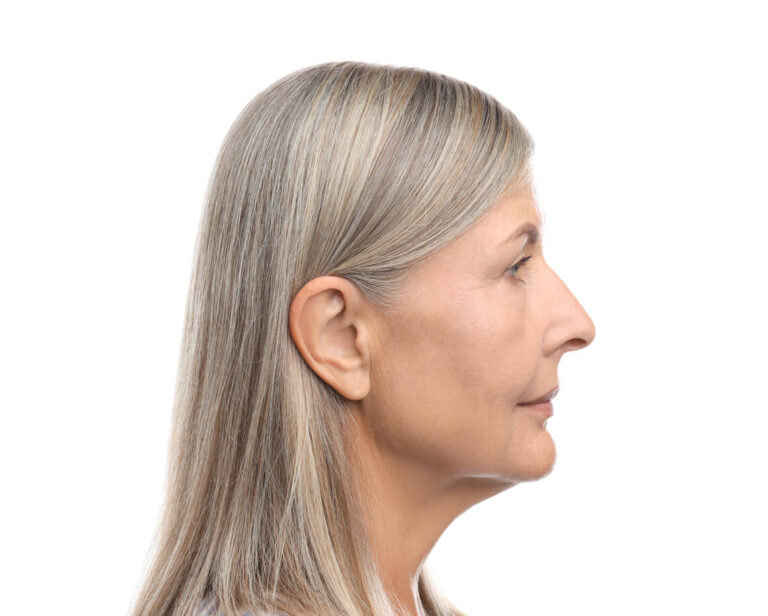
jawline filler sagging jaw

The Role of Fat in Jawline Sagging

Fat distribution is another important contributor to jawline ageing.

Rather than disappearing completely, facial fat often shifts downward during the ageing process. Fat pads from the midface can descend and collect along the jawline, contributing to Jowls, saggy jawlines, and heaviness in the lower face. This can also make features such as nasolabial folds more pronounced.

At the same time, fat loss in areas like the cheeks reduces lift and support. This imbalance between volume loss and volume descent is a key reason many people develop a saggy jawline without weight change.

Muscle Changes and Jawline Definition

Facial muscles play a key role in how the jawline sits at rest.

Over time, repeated facial movement and muscle imbalance can pull the lower face downward. Some muscles become overactive, while others weaken. This contributes to facial sagging and reduced jawline definition.

While facial exercises are often discussed, their impact is limited compared to targeted non-surgical treatments. When muscle support declines, even hydrated skin and balanced fat distribution may not be enough to maintain a sharp jawline.

Professional Guidance Matters

Jawline sagging is rarely caused by one factor alone. A qualified practitioner should assess skin quality, fat distribution, muscle activity, and facial structure before recommending treatment.
At Dermoperfection, jawline rejuvenation begins with detailed facial analysis to ensure safe, personalised treatment plans that restore definition while maintaining natural balance.

Why Jawline Sagging Is Rarely One Thing

When people ask what causes jawline sagging, the answer is rarely skin or fat or muscle alone.

In most cases, jawline ageing involves a combination of reduced collagen production, loss of skin elasticity, fat redistribution, muscle imbalance, and changes to facial bone structures. Together, these factors lead to sagging jowls and loss of definition.

This is why treatments that focus on only one layer often produce limited or short-lived results.

Treating the Cause, Not Just the Appearance

Effective jawline rejuvenation depends on identifying what is actually driving the change.

If skin laxity is the main issue, skin tightening and skin rejuvenation treatments such as radiofrequency treatments, microneedling with radiofrequency, laser resurfacing, or skin peels may help. If volume shift is contributing, carefully placed dermal fillers containing hyaluronic acid may restore support. If muscle imbalance plays a role, options such as anti-wrinkle injections or botox injections may be appropriate.

Treating the wrong layer can lead to disappointing outcomes or results that look unnatural, heavy, or poorly balanced.

The Importance of Assessment

Jawline ageing looks different on every face.

A professional assessment considers skin quality, collagen levels, fat distribution, muscle activity, facial tissues, and overall structure. This ensures personalised treatment plans are created using appropriate non-surgical treatments rather than a generic approach.

Without this step, jawline treatments often become guesswork rather than targeted rejuvenation.

When Non-Surgical Options Can Help

For many people, jawline sagging can be improved without surgery, including traditional facelift or neck lift procedures.

Modern non-surgical treatments may include skin tightening, thread lifts, dermal filler injections, botox injections, microneedling, chemical peels, laser resurfacing, or non surgical sagging jowl lifts, depending on the underlying cause.

Results are typically subtle and progressive, improving definition while maintaining natural facial expression and avoiding the risks associated with surgery.

The Dermoperfection Approach

At Dermoperfection, jawline ageing is approached with precision and restraint.

Each face is assessed for skin behaviour, collagen production, volume changes, muscle balance, and overall structure before any treatment is recommended. The focus is on restoring definition, improving skin elasticity, and supporting youthful contours without overtreatment.

Concerned About Jawline Sagging?

If you are wondering what causes jawline sagging in your face specifically, understanding the underlying cause is the most important first step.

A professional assessment can determine whether skin, fat, muscle, or a combination of factors is driving change, allowing treatment to be planned safely and effectively for natural-looking, balanced results without surgery.

Preventative Facial Ageing Treatments in Your 30s and 40s

If you are researching preventative facial ageing treatments, you are already thinking ahead, and that is exactly the point. The most effective facial rejuvenation often happens before visible signs of ageing become advanced or difficult to reverse.

Your 30s and 40s are a key window for prevention. This is when subtle changes related to the ageing process and skin ageing begin, including reduced collagen production, early collagen degradation, shifts in skin texture, early fine lines, and changes in muscle behaviour, even if you still “look young.” Addressing these changes early can slow visible ageing, maintain definition, support volume maintenance, and reduce the need for more corrective or invasive procedures later on.

This guide explains what preventative facial ageing treatments really mean, why timing matters, and how a strategic approach in your 30s and 40s can protect long-term skin quality and facial health.

What Does “Preventative Facial Ageing” Actually Mean?

Preventative facial ageing treatments are not about changing how you look or chasing youth.

Instead, they focus on:

  • Supporting collagen, elastin, and dermal collagen production before significant loss occurs
  • Preserving facial anatomy, structure, and balance
  • Maintaining skin quality, hydration, and resilience
  • Preventing facial lines, wrinkles, laxity, and volume loss from becoming established

The goal is to slow the ageing process, not to correct advanced ageing later with fillers, surgery, or a facelift.

Why the 30s and 40s Matter So Much

From your late 20s onwards, collagen production naturally begins to decline. Cell turnover slows, elastin weakens, and early muscle changes at the neuromuscular junction can influence how the face sits at rest.

In your 30s, changes are often subtle:

  • Fine lines, early crow feet, and glabellar lines appear with expression
  • Skin may feel less hydrated or resilient
  • Early loss of definition may appear around the eyes or jawline

By your 40s, these changes become more visible:

  • Skin laxity develops
  • Lines begin to settle into static wrinkles
  • Facial contours soften as volume loss progresses

Preventative treatments work best before these changes become fixed.

preventative ageing image

Skin Quality as the Foundation of Prevention

Healthy, resilient skin is one of the strongest defences against facial ageing.

Preventative treatments often focus on improving:

  • Collagen remodeling and elastin strength
  • Hydration using hyaluronic acid and professional skincare
  • Skin tone, firmness, and skin texture

Treatments such as chemical peels, microneedling, hydrafacial, LED light therapy, platelet-rich plasma, and laser skin resurfacing (including nonablative treatment, fractional photothermolysis, and full-face resurfacing) support ongoing skin rejuvenation and address sun damage, extrinsic ageing, and environmental stress.

Daily skincare, peptides, serums, sunscreen, and sun protection remain essential parts of long-term prevention.

Preventing Lines Before They Set

Dynamic facial lines, including crow feet, glabellar lines, and frown lines, are often the first visible signs of ageing.

Repeated muscle movement over time contributes to permanent wrinkles through nerve stimulation and repetitive contraction. Preventative approaches may involve gentle muscle relaxation using botulinum toxin or neurotoxin treatments such as botox, delivered conservatively.

When used appropriately, these anti-wrinkle treatments soften excessive movement while preserving expression and facial identity.

Professional Guidance Matters

Preventative facial ageing treatments should always be personalised. A qualified practitioner must assess skin quality, muscle activity, collagen levels, and facial structure before recommending early intervention.
At Dermoperfection, prevention begins with detailed facial analysis to ensure treatments are minimal, strategic, and focused on long-term skin health rather than unnecessary procedures.

Supporting Facial Structure Early

Ageing is not just about the skin. Structural support changes as fat shifts and facial anatomy adapts.

Preventative treatments in the 30s and 40s often focus on volume maintenance rather than restoration. Options may include subtle dermal fillers, hyaluronic acid, cheek filler, Profhilo, calcium hydroxylapatite, poly-L-lactic acid, or microinjections that stimulate collagen remodeling without overfilling.

Early structural support reduces the likelihood of requiring corrective fillers, Thread Lift, or surgical intervention later.

Muscle Balance and Facial Ageing

Facial muscles play a significant role in how the face ages.

Over time, some muscles pull downward while others weaken, influenced by electrical currents, neuromuscular signalling, and repetitive movement. This imbalance contributes to heaviness, early sagging, and loss of definition.

Addressing muscle behaviour early supports preventative ageing rather than reactive correction.

Why “Less but Earlier” Often Works Better

One of the biggest misconceptions is waiting until ageing is obvious.

In reality, smaller, well-timed preventative treatments often deliver better long-term outcomes than larger corrective interventions later. This approach reduces downtime, simplifies recovery, and avoids unnecessary surgery.

Prevention allows treatments to work with the natural ageing process rather than against it.

Avoiding Over-Treatment Through Planning

Preventative facial ageing treatments should never be trend-led.

Without careful treatment planning, early intervention can become unnecessary intervention. This is why skin consultation, facial assessment, and restraint are essential. Not every patient in their 30s or 40s needs fillers, botox, laser, or peels.

The most effective anti-ageing strategies are personalised, flexible, and reviewed over time by experienced medical-aesthetic practitioners, dermatology professionals, or a trusted skin clinic.

The Importance of Professional Assessment

Effective prevention depends on understanding how your face and skin are ageing.

A professional assessment considers:

  • Skin quality, elasticity, hydration, and scarring risk
  • Muscle activity, facial lines, and expression patterns
  • Facial anatomy and structural balance
  • Lifestyle factors such as sun exposure, skincare habits, and after-care compliance

This ensures treatments are minimal, appropriate, and genuinely preventative.

The Dermoperfection Approach

At Dermoperfection, preventative facial ageing treatments are approached with precision and long-term thinking.

The focus is not on doing more, but on selecting the right cosmetological strategies at the right time. Treatments may include skin rejuvenation, injectables, collagen stimulation, laser resurfacing, and professional skincare, always chosen to preserve expression and balance.

Prevention is always tailored, never templated.

Considering Preventative Facial Ageing Treatments?

If you are exploring preventative facial ageing treatments in your 30s or 40s, the most important step is understanding where your face and skin are now, not where you fear they might be later.

A professional assessment at a specialist skin clinic can determine whether preventative treatment is appropriate, how to support long-term maintenance, and how to protect your skin and facial structure without unnecessary downtime, risk, or surgery.

How Non Surgical Facelifts Actually Work

If you have been searching how a non surgical facelift works, you are not alone. It is one of the most common questions asked by people who want visible facial rejuvenation without surgery, scars, or extended downtime.

Non surgical facelifts are often misunderstood. Many assume they rely on a single treatment or quick fix, when in reality they involve a carefully planned combination of techniques that address the different ways the face changes over time.
Understanding how modern non-surgical facelift treatments work, and why they focus on treating the face in layers, is key to achieving natural, balanced, and long lasting results without invasive cosmetic procedures.

This guide explains how non surgical facelifts actually work, the treatments involved, and how they address the underlying causes of facial ageing including wrinkles, sagging skin, and loss of volume.

What Is a Non Surgical Facelift

A non surgical face lift is a personalised treatment approach designed to lift, firm, and refresh the face using minimally invasive techniques. Rather than physically pulling the skin, it works by supporting facial structure, improving skin quality, and stimulating collagen and elastin production at different levels of the skin.

Facial ageing is not caused by one factor alone. Over time, collagen production slows, skin laxity increases, fat pads lose volume, and repeated muscle movement contributes to fine lines, wrinkles, frown lines, and crow’s feet. A carefully structured non-surgical facelift approach targets these changes using selected non-invasive options that work in combination.
The aim is to restore harmony and balance to the face while preserving natural expression and supporting long term skin health. 

How Does a Non Surgical Facelift Work

To answer the question clearly, how does a non surgical facelift work, it works by treating the skin and facial structure in layers rather than relying on one solution.

Each treatment addresses a specific aspect of ageing. When combined correctly, they create a visible lifting effect that looks subtle and refined rather than overdone.

Most non surgical facelift plans include a tailored combination of the following approaches.

non surgical facelift image

Restoring Facial Structure and Support

Loss of volume is one of the main reasons the face begins to sag. As cheek fat pads reduce and shift, sagging skin becomes more noticeable and folds such as nasolabial folds, smile lines, and Marionette Lines deepen.

Dermal fillers are used strategically to restore structure in key areas such as the cheeks, chin, and jawline. This includes targeted chin & jawline enhancement to improve facial balance and support the lower face. When placed correctly, dermal fillers lift surrounding tissue rather than adding bulk.

This structural use of filler helps soften lines, improve contours, and support overall facial rejuvenation without creating an unnatural appearance.

Relaxing Muscles That Pull the Face Downward

Certain facial muscles contribute to a tired or heavy appearance over time. Repeated contraction can deepen wrinkles, including frown lines and crow’s feet, and affect facial symmetry.

Anti-wrinkle injections using botulinum toxin help by relaxing overactive muscles that pull the face downward. This allows opposing muscles to lift more effectively, creating a fresher and more open appearance.

In addition, advanced muscle stimulation treatments such as EMFACE for non-injectable facial lifting can strengthen and tone facial muscles while supporting skin tightening at the same time. This layer of treatment enhances structural support without adding volume, making it an important part of modern lifting protocols.

Used carefully, this approach smooths expression lines while maintaining natural movement and supporting a balanced result.

Professional Guidance Matters

A non surgical facelift should always be personalised. Facial structure, skin quality, and ageing patterns differ for every patient, so a professional assessment is essential to choose the right combination of treatments for safe, natural results.

At Dermoperfection, every non surgical facelift begins with a detailed consultation to ensure balanced, long term outcomes.

Tightening the Skin and Improving Firmness

Skin laxity plays a major role in facial ageing, particularly around the jawline, lower face, and neck.

Advanced skin tightening technologies including radiofrequency treatments, RF microneedling, and targeted lasers work by gently heating the deeper layers of the skin. This controlled energy stimulates collagen and elastin production while encouraging gradual skin tightening.

As collagen rebuilds, the skin becomes firmer and more resilient. Results continue to improve gradually in the weeks following treatment, with minimal swelling and recovery compared to surgical options.

Improving Skin Quality and Texture

A true non surgical facelift focuses on skin quality as well as lift. Even subtle improvements in texture, hydration, and tone can significantly improve the appearance of wrinkles and uneven skin.

Treatments such as skin boosters, microneedling, RF microneedling, laser skin resurfacing and support skin health by improving elasticity, hydration, and overall texture. These treatments work beneath the surface using controlled energy or a fine needle to encourage regeneration.

This layer of treatment enhances how the skin reflects light and often delivers the refreshed glow patients associate with effective facial rejuvenation.

Why Combination Treatment Is Essential

No single treatment can address every aspect of facial ageing. Using one approach alone may lead to imbalanced results.

For example, adding dermal fillers without addressing skin laxity may leave the face looking heavy. Skin tightening without restoring volume may produce limited lift. Treating muscles without structural support can flatten facial contours.

A non surgical face lift works best when treatments are combined thoughtfully to address structure, muscle activity, and skin quality together, while prioritising safety and natural outcomes.

What Results Can You Expect

Results from a non surgical facelift are designed to look natural and progressive. Some improvements are visible immediately, while others develop gradually as collagen production increases.

Patients often notice improved facial contours, firmer skin, softened fine lines, and reduced appearance of wrinkles. Friends and family may comment that you look refreshed without being able to pinpoint a specific change.

Results vary depending on the treatments used, skin condition, and lifestyle factors. Maintenance treatments help sustain results while managing potential risks associated with ageing skin over time.

Who Is a Non Surgical Facelift Suitable For

Non surgical facelifts are suitable for patients experiencing early to moderate signs of ageing who want noticeable improvement without surgery. They are also ideal for those wishing to delay procedures such as thread lifts or avoid more invasive cosmetic procedures entirely.

A professional facial assessment is essential to assess skin quality, facial anatomy, and individual goals. There is no one size fits all approach in the modern cosmetic industry.

The Dermoperfection Approach

At Dermoperfection, non surgical facelifts are designed with precision, balance, and long term skin health in mind. Treatments are selected based on how your skin behaves, heals, and responds, not trends or assumptions.

The focus is always on achieving refined, natural looking results using minimally invasive techniques that enhance your features rather than change them.

Considering a Non Surgical Facelift

If you are exploring how a non surgical facelift works and want clarity on which non-invasive options would benefit your skin, a consultation is the most important first step.

Professional assessment ensures your treatment plan is safe, effective, and aligned with your long term skin goals, helping you achieve a refreshed and rejuvenated appearance without surgery.

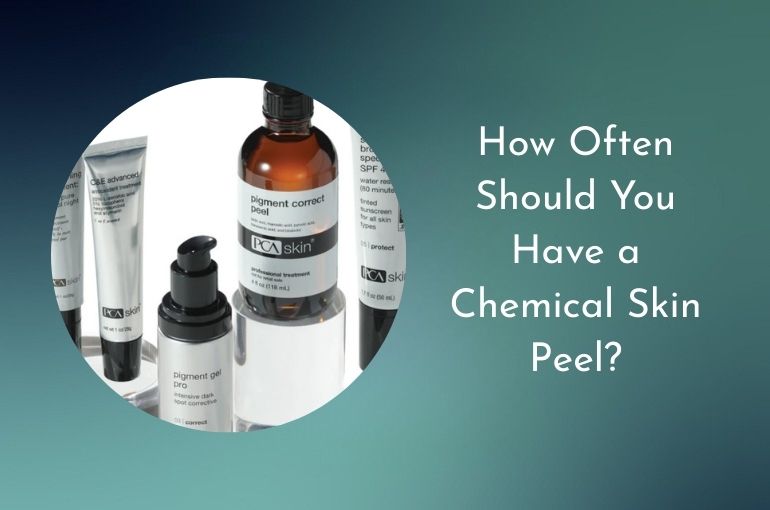
How Often Should You Have a Chemical Skin Peel?

One of the most common questions people ask when considering a Chemical Peel is how often treatments should be carried out. The answer isn’t one-size-fits-all. Chemical peels work in harmony with the skin’s natural renewal cycle, and treatment frequency depends on skin type, concerns, and the depth of the peel used.

Understanding how often to have a chemical peel helps maintain healthy skin while avoiding over-exfoliation and unnecessary irritation.

Understanding the Skin Renewal Cycle

The skin continuously renews itself through a process known as cell turnover, where new skin cells replace old, damaged ones. On average, this cycle takes around 28 days, though it can slow with age, sun damage, or certain skin conditions.

Chemical peels support this process by removing dead skin cells and encouraging more efficient renewal. However, the skin still needs time to heal, rebuild collagen, and restore its barrier between treatments.

How Peel Type Affects Frequency

The depth of a chemical peel plays a major role in determining how often it should be performed.

Superficial Chemical Peels

Superficial peels focus on the upper layers of the skin and are often used to improve:

  • Uneven skin tone
  • Dull skin
  • Mild sun damage
  • Rough skin texture
  • Early fine lines

Peels containing ingredients such as glycolic acid or salicylic acid are commonly used at this level. These treatments may be carried out more frequently, often every 3–4 weeks, depending on skin tolerance and recovery.

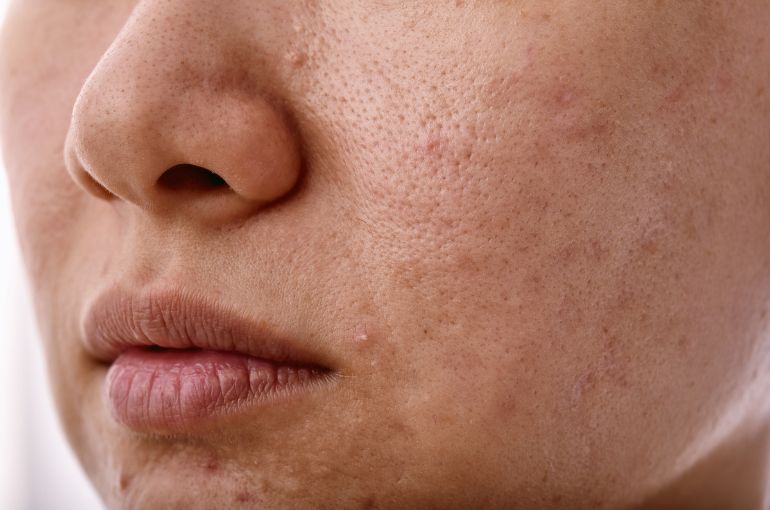
dull skin condition treatment birmingham

Medium-Depth Chemical Peels

Medium-depth peels penetrate further into the skin and are used to address:

  • Acne scars
  • Uneven skin texture
  • Uneven skin tone
  • More established sun damage

Because these peels affect deeper skin layers, they require longer recovery time and are usually spaced further apart. Treatments may be recommended every few months as part of a structured treatment plan.

Deep Chemical Peels

A Deep Chemical Peel reaches the deepest layers of the skin and is used selectively for more advanced concerns. Due to the intensity and extended healing process, deep peels are not performed frequently and require careful medical oversight.

Professional Guidance Matters

Determining how often to have a chemical peel should always involve professional input. A qualified practitioner can assess skin behaviour, healing response, and treatment goals to create a safe, effective schedule. At Dermoperfection, chemical peels are planned following professional skin assessment, ensuring frequency and peel depth support healthy results without compromising the skin.

Course-Based Treatments vs Maintenance Peels

Chemical peels are often planned in one of two ways:

Course-Based Treatments

A course of peels may be recommended to target specific skin concerns, such as acne scars or sun-damaged skin. These treatments are scheduled at safe intervals to allow the skin to heal while gradually improving texture and tone.

Maintenance Treatments

Once skin concerns are under control, chemical peels may be used periodically as part of ongoing skin care to maintain clarity, support collagen production, and keep the skin looking refreshed.

Avoiding Over-Exfoliation

More frequent peels do not necessarily lead to better results. Over-exfoliation can:

  • Disrupt the skin barrier
  • Increase sensitivity
  • Delay healing
  • Worsen pigmentation

Allowing adequate time between treatments supports healthy skin regeneration and long-term improvement rather than short-term irritation.

Factors That Influence How Often You Should Have a Chemical Peel

The ideal frequency depends on several individual factors, including:

  • Skin type and sensitivity
  • Specific skin concerns being treated
  • History of sun exposure
  • Presence of sun damage or acne scarring
  • Current skincare routine and products used

A professional assessment helps determine safe spacing and peel strength.

The Role of Skincare and Sun Protection

Between chemical peels, maintaining a supportive skincare routine is essential. Gentle cleansing, appropriate moisturisation, and daily sun protection help preserve results and protect the skin while it regenerates.

Using suitable skincare products between treatments also helps maximise outcomes and reduce the need for more frequent peels.

Chemical Peels as Part of Long-Term Skin Maintenance

When scheduled correctly, chemical peels can support:

  • Smoother skin texture
  • Improved skin tone
  • Reduced appearance of fine lines
  • Gradual improvement in acne scars
  • Ongoing skin renewal

They are most effective when used as part of a long-term skin health strategy rather than a one-off solution.

How Often Should You Have a Chemical Peel?

The ideal frequency for chemical peels depends on:

  • Peel depth
  • Skin type and tolerance
  • Specific skin concerns
  • Recovery time between treatments

When spaced appropriately, chemical peels support healthy cell turnover, improved skin texture, and long-term skin health without overloading the skin.

Considering Chemical Peel Treatments?

If you are exploring chemical peels as part of your skincare plan, professional guidance at Dermoperfection helps ensure treatments are scheduled safely and effectively to support healthy skin function and long term results.

Are Chemical Skin Peels Safe?

Chemical peels are widely used skin treatments designed to improve skin tone, texture, and overall skin health. When performed correctly, they are considered safe and effective for a wide range of skin concerns. However, because chemical peels involve applying a chemical solution to the skin, it’s natural to ask: are chemical skin peels safe?

The answer depends on several key factors, including peel depth, skin type, formulation used, and whether the treatment is guided by professional assessment rather than self-selection.

How Chemical Skin Peels Work

Chemical peels work by applying carefully formulated acids to the skin, encouraging controlled exfoliation and renewal of skin cells. This process removes damaged surface cells and stimulates regeneration across different layers of skin, depending on the peel used.

Common acids found in chemical peels include:

  • Glycolic acid
  • Salicylic acid
  • Other clinically formulated acid blends

By promoting controlled exfoliation, chemical peels support smoother skin texture, more even skin tone, and improved clarity.

Different Peel Depths and Safety Considerations

Chemical peels are categorised by depth, and safety considerations vary accordingly.

Superficial Peels

Superficial peels act on the outermost skin layers and are generally used for:

  • Rough skin
  • Uneven skin tone
  • Mild fine lines
  • Early sun damage

These peels typically involve milder acids and are associated with minimal downtime.

Medium Skin Peels

Medium skin peels penetrate further into the skin and are often used to address:

Because they affect deeper layers, professional assessment and aftercare are essential to support safe healing.

Deep Skin Peels

Deep skin peels reach the deepest layers of skin and are used selectively for advanced concerns. A deep chemical peel requires strict medical oversight due to increased intensity, downtime, and recovery considerations.

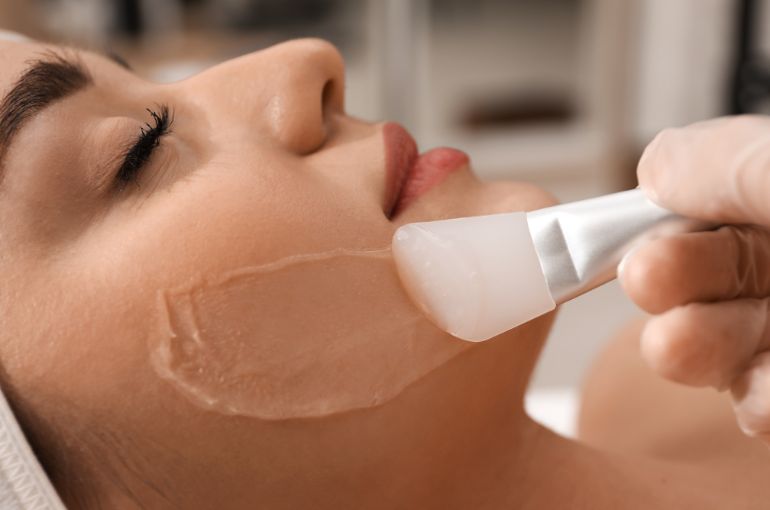
chemical peel close up - birmingham

The Importance of Skin Assessment

One of the most important safety factors with chemical peels is appropriate skin assessment. Not all peels are suitable for all skin types. A professional evaluation considers:

  • Skin type and sensitivity
  • Existing skin conditions
  • History of reactions or sensitivity
  • Presence of acne scarring or pigmentation
  • Risk factors such as sun exposure

This ensures the peel selected supports skin health rather than compromising it.

Sensitive Skin and Chemical Peels

Patients with sensitive skin or underlying skin sensitivity require particular care. While chemical peels can still be appropriate, the formulation, depth, and treatment frequency must be adjusted.
Using the wrong peel or over-treating sensitive skin can lead to irritation, prolonged redness, or disruption of the skin barrier. This is why chemical peels should always be planned with guidance from a qualified skin care specialist.

Where Professional Care Fits In

At Dermoperfection, chemical peels are delivered following professional skin assessment, with treatment selection based on skin type, concern severity, and tolerance rather than trend-based decisions. This consultation-led approach helps ensure chemical peels are used safely and appropriately, supporting both immediate results and long-term skin health.

Avoiding Overuse and At-Home Risks

One of the main safety risks associated with chemical peels is overuse, particularly with unsupervised or aggressive at-home treatments.

Excessive peeling can:

  • Damage the skin barrier
  • Increase sensitivity
  • Worsen pigmentation
  • Delay healing

Professional skin resurfacing treatments differ significantly from consumer products, as they are administered with controlled techniques, appropriate concentrations, and aftercare guidance.

Chemical Peels vs Other Skin Resurfacing Treatments

Chemical peels are often compared with other resurfacing options such as laser resurfacing. While both aim to improve skin quality, they work differently and carry different risk profiles.

Chemical peels rely on controlled exfoliation, while laser resurfacing uses energy-based technology to stimulate skin repair. The safest option depends on skin behaviour, tolerance, and the specific concern being treated.

Regulation and Professional Standards

Chemical peels used in clinical settings are subject to regulation and should only be administered by trained professionals using approved skin products.

Treatment by a qualified skin care specialist ensures:

  • Appropriate peel selection
  • Correct application technique
  • Safe treatment intervals
  • Proper aftercare advice

These factors significantly reduce risk and support predictable outcomes.

Chemical Peels and Long-Term Skin Health

When performed correctly, chemical peels can support:

  • Improved skin tone
  • Reduction in fine lines
  • Smoother skin texture
  • Healthier, more resilient skin

They also encourage skin renewal without permanently altering skin structure, making them suitable as part of long-term skin health plans.

Are Chemical Skin Peels Safe?

Chemical skin peels are considered safe when:

  • The correct peel depth is selected
  • Skin type and sensitivity are assessed
  • Treatments are delivered by trained professionals
  • Overuse and inappropriate formulations are avoided

With proper guidance, chemical peels can be an effective and safe option for improving skin tone, texture, and overall appearance.

Considering a Chemical Skin Peel?

If you are exploring chemical peel treatments and would like reassurance around safety and suitability, a professional assessment at Dermoperfection ensures treatments are carefully selected, well controlled, and aligned with your skin’s individual needs and long term skin health goals.

How to Choose the Right Chemical Peel for Your Skin Type

Choosing the right chemical peel is not about selecting the strongest option or following trends. Chemical peels vary in strength, depth, and formulation, and the most effective results come from matching the peeling depth to your skin type, tolerance, and specific skin concerns.

Understanding how different peels work and when they are appropriate helps ensure treatments improve skin safely while supporting long-term skin rejuvenation rather than causing unnecessary irritation or damage.

Why Chemical Peel Selection Matters

Chemical peels work by applying chemical solutions to the skin to remove dead skin cells, stimulate cell turnover, and encourage regeneration. However, not all peels affect the skin in the same way.

Choosing the wrong acid peel or depth can lead to:

  • Excessive irritation
  • Delayed healing
  • Compromised skin barrier
  • Worsening of pigmentation or sensitivity

This is why chemical peel selection should always be guided by professional assessment rather than self-selection.

Step 1: Understand Your Skin Type

Different skin types respond differently to chemical peels. Factors such as oil production, sensitivity, and resilience influence which peel is appropriate.

For example:

  • Oily or acne-prone skin may tolerate certain acids better
  • Dry or sensitive skin may require gentler formulations
  • Sun-damaged or ageing skin may benefit from specific peel depths

A professional assessment helps determine how your skin behaves and how it is likely to respond to treatment.

skin concerns treatment in birmingham

Step 2: Identify Your Skin Concerns

The right chemical peel depends on the concern being treated. Chemical peels are commonly used to improve:

  • Fine lines & wrinkles
  • Uneven skin tone
  • Sun damage and sun spots
  • Age spots
  • Uneven skin texture
  • Acne and acne scarring
  • Post-acne scars
  • Sun-damaged skin

Different concerns sit at different depths within the skin, which directly influences the appropriate peel type and strength.

Step 3: Consider Peel Depth

Chemical peels are generally categorised by depth, and each level serves a different purpose.

Superficial Peels

Superficial peels focus on the outermost skin layers and are often used to:

  • Improve skin tone
  • Brighten dull skin
  • Support mild skin renewal

They typically involve milder acids such as lactic acid and are suitable for regular maintenance.

Medium-Depth Peels

Medium-depth peels penetrate further into the skin and are often used to treat:

  • Acne scars
  • Uneven texture
  • Pigmentation issues
  • Early signs of ageing

A Medium Peel may be recommended when surface treatments alone are not sufficient.

Deep Peels

Deep chemical peels penetrate the deepest skin layers and are used selectively for advanced concerns such as:

  • Significant sun damage
  • Deeper wrinkles
  • More established pigmentation

Because a deep chemical peel has greater intensity and downtime, it requires careful assessment and strict aftercare.

Chemical Peels as Part of a Wider Skin Treatment Plan

Chemical peels are often most effective when included within broader treatment options focused on long-term skin health. They may be combined with other skin treatments to address hydration, texture, or regeneration more comprehensively. At this stage, consultation-led planning helps ensure chemical peels enhance results rather than overwhelm the skin.

Step 4: Assess Skin Tolerance and Sun Exposure

Skin tolerance plays a major role in peel selection. Factors such as sensitivity, a history of skin reactions, the current skincare routine, and recent sun exposure all influence how the skin responds to treatment. Patients with significant recent sun exposure or a compromised skin barrier may require modified treatment plans to protect skin health and minimise risk.

Step 5: Why Professional Assessment Is Essential

Although chemical peels are widely discussed online, selecting the appropriate peel requires clinical judgement. A professional assessment evaluates the skin’s type and current condition, the depth and nature of the concern being treated, the skin’s healing capacity, the risk of post-inflammatory pigmentation changes, and overall skin behaviour over time. This comprehensive evaluation ensures that peel selection supports safe skin regeneration, effective collagen stimulation, and results that are both visible and sustainable.

When to Seek a Skin Consultation

If you are unsure which peel is appropriate for your skin, a professional skin consultation helps clarify:

  • Suitable peel depth
  • Acid selection
  • Treatment frequency
  • Expected outcomes and recovery

How to Choose the Right Chemical Peel

Choosing the right chemical peel involves understanding:

  • Your skin type and tolerance
  • The specific skin concern being treated
  • Appropriate peeling depth
  • The importance of professional assessment

When selected correctly, chemical peels can improve skin tone, texture, and clarity while supporting long-term skin health.

Considering a Chemical Peel?

For those exploring chemical peel treatments, consultation-led guidance at Dermoperfection ensures the most appropriate approach is selected based on individual skin type, specific concerns, and long-term skin health goals. This personalised assessment supports safer treatments and more effective, sustainable results.

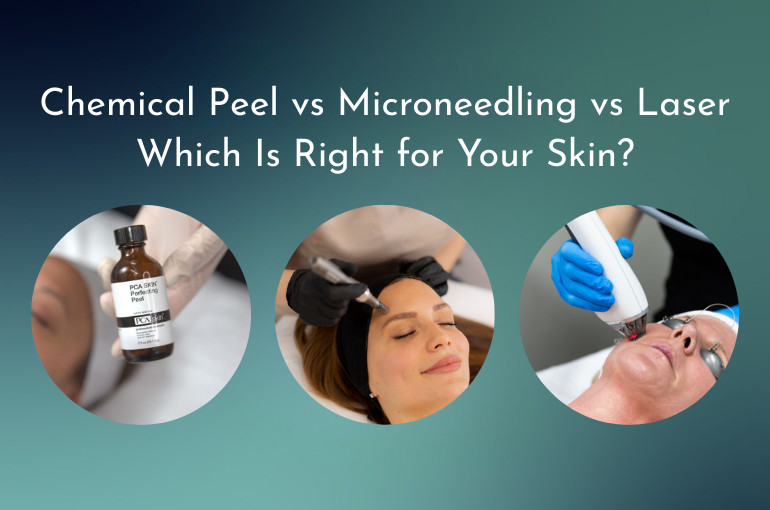
Chemical Peel vs Microneedling vs Laser: Which Is Right for Your Skin?

When comparing skin renewal treatments, chemical peels, microneedling treatments, and laser resurfacing are often discussed together. Each is a popular non-surgical treatment designed to improve skin quality, but they work in different ways and target different skin concerns.

Understanding how these treatments affect the skin from surface exfoliation to deeper collagen stimulation is key to choosing the most effective option for your skin type, condition, and long-term goals.

Chemical Peels: Improving Skin Tone and Surface Clarity

Chemical peels, sometimes referred to as chemical peeling, use a controlled chemical solution to exfoliate the upper layers of the skin. By removing dead skin cells and accelerating cell turnover, chemical peels support visible improvements in skin tone, clarity, and texture.

Chemical peels are commonly used to treat:

  • Uneven skin tone
  • Dull or tired-looking skin
  • Sun damage and sun spots
  • Age spots
  • Fine lines
  • Mild scarring
  • Post-inflammatory hyperpigmentation

Because chemical peels focus on surface renewal and controlled exfoliation, they are often suitable for patients looking to brighten the skin and improve overall appearance without deeper intervention.

Microneedling: Collagen Stimulation and Texture Repair

Microneedling treatments, also known as collagen induction therapy, work by creating controlled micro injuries in the skin. These micro injuries trigger a natural healing response, releasing growth factors and increasing collagen production and elastin production at the dermal level.

Microneedling is particularly effective for:

Unlike chemical peels, microneedling does not exfoliate the surface of the skin. Instead, it strengthens the skin from within by encouraging regeneration and improving structural support over time.

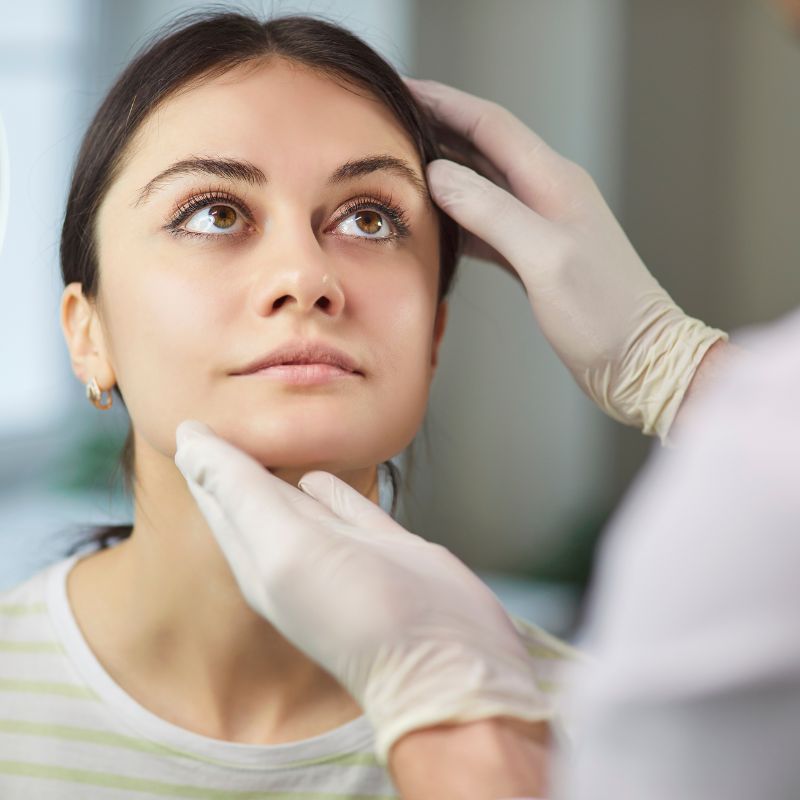
skin consultation in birmingham clinic

Laser Resurfacing: Targeted Treatment at Greater Depth

Laser resurfacing uses focused light energy to treat specific skin conditions at varying depths. Laser treatments create a controlled inflammatory response, encouraging collagen renewal and supporting long-term skin repair.

Laser resurfacing is often considered for:

  • Advanced sun-damaged skin
  • Deeper wrinkles
  • Uneven pigmentation
  • Persistent textural irregularities

Because laser treatments interact directly with skin tissue, aftercare and recovery can vary depending on the treatment area, skin type, and intensity used.

How These Treatments Differ in Practice

While all three options aim to improve skin quality, they influence the skin in different ways:

  • Chemical peels focus on exfoliation, surface renewal, and improving tone through enhanced cellular turnover.
  • Microneedling works deeper within the skin to stimulate collagen and support regeneration, making it well suited to scarring and texture issues.
  • Laser resurfacing delivers energy-based treatment to address more established damage and deeper structural concerns.

The most effective choice depends on how your skin behaves, how deeply the concern sits, and how your skin responds to stimulation.

Which Skin Renewal Treatment Is Right for You?

Chemical peels, microneedling, and laser resurfacing each target different skin concerns from acne scars and pigmentation to fine lines and texture. The key to achieving the best results isn’t guessing it’s choosing the right treatment (or combination) based on your skin’s unique needs. If you’re considering chemical peel treatments as part of a personalised skin care plan, expert, consultation-led guidance ensures your treatment is safe, effective, and aligned with your long-term skin goals.

Choosing the Right Treatment for Your Skin

Selecting the most appropriate treatment involves considering:

  • Skin type and sensitivity
  • Specific skin concerns, such as acne scars or pigmentation
  • History of sun damage or post-inflammatory hyperpigmentation
  • Healing response and lifestyle factors
  • Desired balance between results and downtime

For some patients, chemical peels may be sufficient to restore brightness and smoothness. Others may benefit more from microneedling or laser treatments, particularly when addressing deeper texture or structural changes.

The Importance of Professional Skin Assessment

No single treatment is universally “best.” Choosing between chemical peels, microneedling, and laser resurfacing requires assessment by experienced skin professionals who understand skin structure, healing patterns, and long-term outcomes.

A consultation with a qualified skin care professional helps ensure treatment options are selected safely, taking into account:

  • Skin type and condition
  • Current skincare routine and topical treatments
  • Risk factors such as sensitivity or previous reactions
  • Desired clinical outcomes

At this stage, treatment plans can be tailored to support effective skin regeneration and sustainable results.

Aftercare and Long-Term Results

Appropriate aftercare advice plays an important role in all skin renewal treatments. Supporting the skin barrier during recovery helps optimise outcomes, reduce irritation, and maintain healthy cell renewal.

With the right treatment selection and aftercare, patients can achieve:

  • Improved skin texture
  • More even skin tone
  • Enhanced collagen support

A more rejuvenated appearance with brighter, smoother and younger-looking skin.

At Dermoperfection, skin renewal is approached with expertise, precision, and an understanding that no two skins behave the same. Rather than relying on trends or assumptions, treatments are selected based on how your skin functions, heals, and responds over time.

If you’re considering chemical peels, microneedling, or laser treatments and want clarity on what will genuinely benefit your skin, a professional consultation can help create a plan that’s safe, effective, and tailored to your long-term skin health.

Add to cart