
Natural-Looking Results: Why Regenerative Injectables Are in Demand

Many people begin exploring aesthetic treatments because they want to look fresher, more rested, or more confident in their appearance. Often, the goal is not to look different, but simply to look like a healthier version of themselves.

In the past, treatments such as dermal fillers and other cosmetic treatments were commonly used to achieve these results. While they can be very effective, not everyone feels comfortable with the idea of adding volume or changing the shape of their face.

Because of this, there has been a noticeable shift towards treatments that focus on enhancing the skin rather than altering facial features. This is where regenerative injectables have become increasingly popular.

Patients are now actively searching for natural-looking injectable treatments that improve the skin in a subtle and gradual way and support truly natural results.

What Do Natural-Looking Results Really Mean?

Natural-looking results can mean different things to different people, but most patients are referring to a similar outcome.

They want their skin to look:

  • smoother
  • fresher
  • more even in tone
  • slightly firmer

without it being obvious that they have had treatment.

The aim is not to change facial structure or create noticeable volume, but to improve the overall quality of the skin so that it reflects light better and appears healthier. For many patients, this is about achieving natural results that align with their features and wider aesthetic goals.

This is why treatments that work with the skin, rather than sitting within it, are becoming more appealing.

Why Traditional Approaches Do Not Always Meet These Expectations

Dermal fillers are designed to restore facial volume and reshape areas of the face. In many cases, they can produce very good results when used carefully.

However, they do not directly improve the underlying quality of the skin.

This means that while certain lines or areas may be softened, concerns such as:

  • skin texture
  • elasticity
  • hydration
  • overall skin tone

may still remain.

For patients who are primarily concerned with how their skin looks and feels, this approach may not fully meet their expectations. Concerns such as facial wrinkles, dehydration, and changes linked to skin ageing often need a different approach.

The Rise of Regenerative Injectables

Regenerative injectables are designed to support the skin from within.

Instead of adding volume, they stimulate the body’s natural processes, particularly collagen and elastin production. This helps improve the structure and quality of the skin over time.

As collagen levels increase, the skin can begin to feel:

  • firmer
  • smoother
  • more resilient
  • more hydrated

This gradual improvement is one of the main reasons these treatments are now in demand. Many of these treatments are part of the wider shift towards regenerative medicine and more advanced non-invasive aesthetic procedures.

Patients looking for natural-looking injectable treatments often prefer this approach because it enhances their skin without creating visible changes in facial shape.

Why Subtle Results Are Becoming More Popular

There has been a clear shift in how people approach aesthetic treatments.

Many patients are now more cautious about treatments that create immediate or noticeable change. Instead, they are looking for results that develop slowly and feel more in line with their natural appearance.

Common preferences discussed during consultation include:

  • wanting to avoid a filled or overdone look
  • maintaining natural facial movement
  • improving skin quality rather than volume
  • achieving results that are not immediately obvious

Regenerative injectables align with these preferences because they work gradually and support the skin over time. This makes them appealing for patients with clear treatment goals who want improvement without obvious change.

How Collagen Plays a Key Role

Collagen is one of the most important components of youthful skin. It provides structure, firmness, and elasticity.

As collagen production slows with age, the skin can begin to show:

  • fine lines
  • loss of firmness
  • dullness
  • uneven texture

Treatments that stimulate collagen help address these changes at their source.

This is why collagen stimulating treatments are becoming a central part of modern facial rejuvenation. They focus on improving how the skin functions, not just how it looks on the surface. In this sense, regenerative injectables and collagen stimulators are playing an increasingly important role in skin support over time.

Professional Guidance Matters

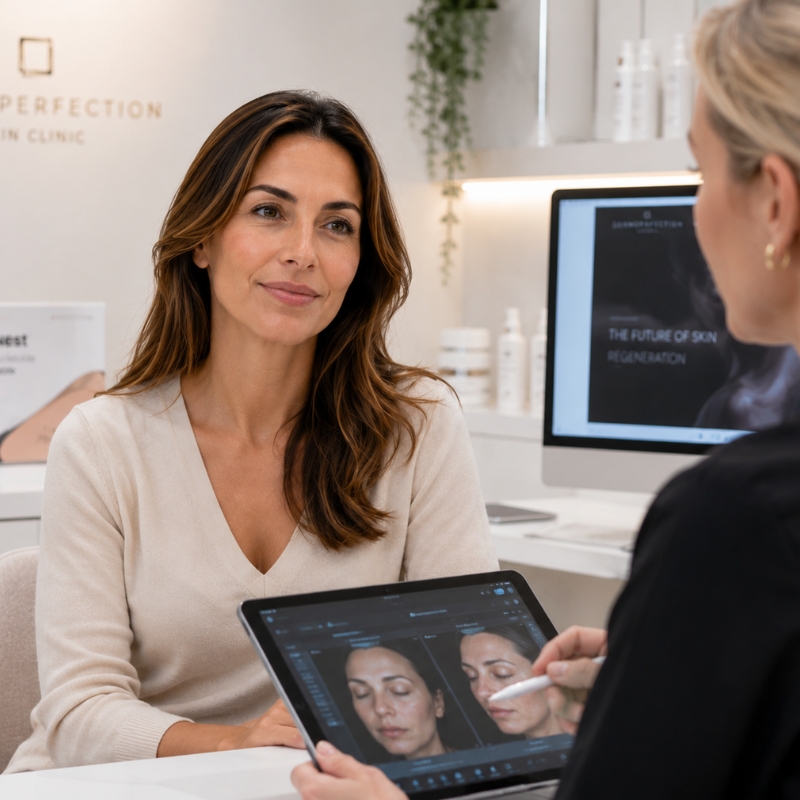
At Dermoperfection, every treatment plan begins with detailed facial analysis to ensure balanced, natural-looking results.

Treatments That Support Natural-Looking Results

There are several regenerative injectables that can help improve skin quality while maintaining a natural appearance.

For example:

  • Julaine supports overall skin quality and structural improvement
  • Profhilo improves skin hydration and skin texture
  • Sculptra stimulates deeper collagen production over time

Each treatment works slightly differently, but they all aim to enhance the skin rather than reshape the face. Some are often referred to more broadly as collagen stimulators because of the way they encourage collagen support over time.

Patients exploring skin rejuvenation injectables are often guided through these options during consultation to find the most suitable approach. This may depend on skin condition, facial anatomy, and the individual’s overall aesthetic goals.

A Gradual Approach to Facial Rejuvenation

One of the defining features of regenerative treatments is that results develop over time.

Rather than seeing an immediate change, patients may notice gradual improvements in how their skin looks and feels.

This can include:

  • improved skin texture
  • better hydration and glow
  • increased firmness
  • a more refreshed appearance

Because the changes are subtle, they often feel more natural and less noticeable to others.

This makes regenerative injectables particularly appealing for patients who want to enhance their appearance without drawing attention to the treatment itself. In some treatment plans, they may also sit alongside other cosmetic procedures, such as an anti-wrinkle injections, depending on the patient’s needs.

Who May Be Suitable for This Approach

Natural-looking injectable treatments are often suitable for patients who:

  • are noticing early signs of ageing
  • want to improve skin quality rather than volume
  • prefer subtle, gradual results
  • feel unsure about dermal fillers
  • want to maintain a natural appearance

They can also be used as part of a longer-term treatment plan to support skin health and ageing. Some patients may also be exploring concerns in areas such as the tear trough, jawline, or other areas affected by subtle changes in facial volume.

During consultation, practitioners assess your skin and goals to determine the most appropriate treatment approach. This helps ensure treatments align with your skin, your priorities, and your wider treatment goals.

Why This Trend Is Continuing to Grow

The increasing demand for natural-looking results reflects a broader shift in how people think about ageing and aesthetic treatments.

Rather than focusing on correction, there is now more emphasis on maintenance and prevention.

This approach supports:

  • gradual improvement
  • natural-looking outcomes
  • long term skin health

While traditional treatments still have a place, regenerative injectables are becoming a key part of how modern facial rejuvenation is approached. For some patients, they may also contribute to a broader full face rejuvenation strategy when combined thoughtfully with other options.

Taking a Subtle Approach to Skin Rejuvenation

For many people, the goal is not to change how they look, but to feel more confident in their skin.

Treatments that support natural processes allow the skin to improve in a way that feels balanced and in line with individual features. This can be especially valuable for patients who want to support the skin while still maintaining a natural appearance and avoiding a dramatic shift after post-treatment healing.

At Dermoperfection in Birmingham, the focus is on helping patients achieve this kind of subtle, considered result. The approach is centred around understanding your skin, your aesthetic goals, and choosing treatments that support it over time. Consultations with experienced medical professionals help shape an appropriate plan, explain possible side effects, discuss likely recovery, and provide clear aftercare instructions when needed.

If you are interested in natural-looking injectable treatments and would like to explore a more gradual approach to facial rejuvenation, you can book your consultation with the Dermoperfection team.

For many patients, this is simply about taking a more measured approach to their skin and choosing treatments that feel right for them, whether that includes injectables alone or support from tailored skincare products as part of a wider plan.


Profhilo, Sculptra and Julaine: A Smarter Approach to Non-Surgical Rejuvenation

Many people begin exploring aesthetic treatments when they notice gradual changes in their skin. It may feel less firm, appear more tired, or lose some of its natural glow over time. Concerns such as fine lines, facial wrinkles, and reduced skin quality often prompt patients to explore modern cosmetic treatments.

For years, treatments such as dermal fillers have been used to address these concerns by restoring volume and smoothing lines. While effective in certain situations, this approach does not always address the underlying changes happening within the skin.

Because of this, more patients are now looking for treatments that support the skin itself. This has led to growing interest in non-surgical rejuvenation injectables such as Profhilo, Sculptra, and Julaine.

These treatments offer a different approach, focusing on improving skin quality and supporting long-term skin health rather than creating immediate visible change. As part of modern non-surgical aesthetics, they are increasingly chosen by patients who want a more measured approach to facial rejuvenation.

What Are Non-Surgical Rejuvenation Injectables?

Non-surgical rejuvenation injectables are treatments designed to improve the condition of the skin without surgery or significant downtime.

Rather than adding volume, they work by supporting natural processes within the skin, particularly collagen and elastin production.

This can lead to gradual improvements in:

  • skin firmness
  • hydration
  • elasticity
  • overall texture

Patients exploring non-surgical rejuvenation injectables are often looking for subtle, natural results that develop over time. These injectable treatments are part of a wider move towards non-surgical skin rejuvenation and more advanced aesthetic procedures that focus on skin quality rather than dramatic change.

Why the Approach to Rejuvenation Is Changing

Ageing is not only about volume loss. Changes in skin quality play a significant role in how the face looks and feels.

As collagen production slows, the skin can become thinner, less firm, and less resilient. These changes are not always addressed by treatments that focus only on adding volume.

This has led to a shift towards treatments that support the skin itself, helping it rebuild and maintain its structure.

Patients are increasingly interested in approaches that improve how their skin behaves, rather than simply altering how it looks. This is one of the reasons non-surgical aesthetics continues to grow across aesthetic clinics and skin-focused practices.

Understanding Profhilo

Profhilo is often used to improve hydration and overall skin quality.

It contains a high concentration of hyaluronic acid, which spreads beneath the skin to boost hydration and support skin elasticity.

Rather than adding volume, it works to improve:

  • skin smoothness
  • hydration levels
  • overall glow
  • mild firmness

Profhilo is commonly chosen by patients who want to refresh their skin without changing facial contours. It is often used within broader facial rejuvenation plans where patients want subtle results without altering facial volume.

Understanding Sculptra

Sculptra works deeper within the skin to stimulate collagen production over time.

It is designed to support structural improvement by encouraging the skin to rebuild gradually. Sculptra contains poly-L-lactic acid, sometimes written as poly L-lactic acid, which helps stimulate the activity of fibroblasts and supports collagen renewal over time.

This can lead to:

  • increased skin thickness
  • improved firmness
  • subtle restoration of structure
  • long term collagen support

Patients considering collagen stimulating treatments often explore Sculptra when they are looking for a longer-term approach to skin rejuvenation. Sculptra is often discussed as one of the leading Collagen Stimulators used in modern aesthetic medicine.

Understanding Julaine

Julaine provides a more balanced approach, supporting both skin quality and structural improvement.

It works by stimulating collagen while also improving the overall condition of the skin.

This can help with:

  • skin firmness
  • texture
  • hydration
  • overall resilience

Patients exploring skin rejuvenation injectables often consider Julaine when they want a treatment that supports multiple aspects of skin health. It is often chosen by patients whose aesthetic goals focus on improving skin behaviour rather than reshaping the face.

Professional Guidance Matters

At Dermoperfection, every treatment plan begins with detailed facial analysis to ensure balanced, natural-looking results.

How These Treatments Work Together

Although Profhilo, Sculptra, and Julaine are often discussed separately, they are not always used in isolation.

Each treatment targets a slightly different aspect of the skin:

  • Profhilo focuses on hydration and surface quality
  • Sculptra supports deeper collagen production
  • Julaine provides a balanced improvement across structure and quality

By understanding these differences, practitioners can create a more personalised treatment plan.

In some cases, combining treatments can help address multiple layers of the skin, leading to more balanced and natural results. This may be particularly useful when patients have several concerns such as fine lines, reduced skin quality, early volume loss, or changes around the jawline.

Why This Is Considered a Smarter Approach

This combination of treatments reflects a more considered approach to facial rejuvenation.

Rather than relying on a single treatment, the focus is on understanding how the skin is changing and choosing treatments that support it at different levels.

This approach allows for:

  • more natural-looking results
  • gradual improvement over time
  • better long term skin quality
  • less reliance on volume-based treatments

Patients exploring alternatives to dermal fillers often find this approach more aligned with their goals. It also allows medical professionals to build more thoughtful plans around the patient’s skin, concerns, and long-term aesthetic goals.

A Gradual and Subtle Result

One of the defining features of non-surgical rejuvenation injectables is how the results develop.

Instead of immediate change, improvements happen gradually as the skin responds to treatment.

Patients may notice:

  • smoother skin texture
  • improved hydration
  • increased firmness
  • a more refreshed appearance

Because these changes develop over time, they tend to look more natural and less noticeable as a treatment. This makes them appealing to patients who want improvement in skin quality, softness of wrinkles, and a fresher appearance without obvious change.

Who May Benefit From This Approach

This approach is often suitable for patients who:

  • are noticing early or moderate signs of ageing
  • want to improve skin quality rather than volume
  • prefer subtle, natural-looking results
  • feel unsure about dermal fillers
  • are interested in long term skin health

It can also be adapted depending on individual skin concerns and treatment goals. Patients considering these injectable treatments may also be exploring broader concerns such as loss of definition, early changes in facial support, or interest in subtle jawline contouring without surgery.

A More Considered Way to Approach Skin Ageing

The growing interest in non-surgical rejuvenation injectables reflects a wider shift in how aesthetic treatments are approached.

There is now more emphasis on supporting the skin over time, rather than making immediate visible changes.

This approach supports:

  • gradual improvement
  • natural-looking results
  • long term skin health

While traditional treatments still have a place, they are increasingly used alongside regenerative approaches to create more balanced outcomes. Treatments such as Profhilo, Sculptra, and Julaine sit comfortably within the wider movement towards non-surgical skin rejuvenation, modern aesthetic procedures, and clinically led non-surgical aesthetics.

Exploring a Smarter Approach to Rejuvenation

For many patients, the goal is not to change how they look, but to improve how their skin feels and behaves over time.

Treatments such as Profhilo, Sculptra, and Julaine offer a way to support the skin in a more gradual and considered way, helping it remain firm, hydrated, and resilient. In some cases, they may also sit alongside other facial injections, collagen products, or selected collagen injection approaches depending on the patient’s needs.

At Dermoperfection in Birmingham, this approach is centred around understanding the skin as a whole, rather than focusing on individual concerns in isolation. Careful assessment of facial anatomy, skin quality, and treatment priorities helps guide safe and appropriate recommendations. This is especially important when planning around areas such as the cheeks, jawline, or patients considering subtler alternatives to cheek enhancement.

If you are interested in non-surgical rejuvenation injectables and want to explore a more tailored approach, you can book your consultation with the Dermoperfection team. Consultations are designed to help patients understand the likely treatment pathway, discuss practical considerations such as possible side effects or recovery, and explore whether regenerative options are the right fit.

What Is Injectable Regeneration and Why Are More Patients Choosing It?

Many people begin exploring aesthetic treatments when they notice subtle changes in their skin. This might include fine lines, reduced firmness, or a general feeling that the skin no longer looks as smooth or refreshed as it once did.

For a long time, treatments such as dermal fillers were the most commonly known option. They focus on restoring volume and softening lines, often providing immediate results.

However, not everyone feels that this approach reflects what they want. Many patients are now looking for treatments that improve the skin itself rather than change the shape of their face.

Because of this, more people are starting to ask an important question. What is injectable regeneration, and how is it different from traditional aesthetic treatments?

What Is Injectable Regeneration?

Injectable regeneration refers to a group of treatments designed to improve the skin by supporting its natural repair processes. It sits within the wider move towards Regenerative Medicine and more advanced approaches to facial rejuvenation.

Instead of adding volume, these treatments work by stimulating collagen and elastin production. This helps strengthen the skin from within and improves how it looks and behaves over time.

Collagen is a key component of healthy skin. It provides structure, firmness, and elasticity. As collagen levels decline with age, the skin can begin to show:

  • fine lines
  • reduced firmness
  • uneven texture
  • early skin laxity

Injectable regeneration focuses on addressing these changes by encouraging the skin to rebuild itself gradually. This supports the skin’s natural healing process, encourages tissue remodelling, and helps improve the function of the skin over time.

Patients exploring injectable regeneration are often looking for a way to improve overall skin quality rather than focusing on one specific area.

How Injectable Regeneration Works

These treatments work by stimulating the body’s natural response within the skin.

Once injected, they encourage the production of collagen and other structural components. Over time, this leads to gradual improvements in:

  • skin firmness
  • elasticity
  • hydration
  • overall texture

Unlike treatments that provide immediate visible change, injectable regeneration develops slowly. The skin improves as it rebuilds, which can create more subtle and natural looking results.

This gradual process is one of the reasons many patients feel more comfortable choosing this type of treatment. In simple terms, these regenerative injections work by supporting the skin, underlying cells, and surrounding tissues rather than simply adding volume.

what is injectable regeneration

How It Differs From Traditional Fillers

Although both treatments involve injections, their purpose is very different.

Dermal fillers are designed to:

  • restore lost volume
  • reshape facial features
  • smooth deeper lines

Injectable regeneration is designed to:

  • improve skin quality
  • stimulate collagen production
  • support long term skin health

This difference changes how the results look and feel.

Rather than creating immediate changes in facial contours, regenerative treatments improve the condition of the skin itself. These more targeted procedures are often chosen by patients who want support for facial skin rejuvenation without relying on visible structural change.

Many patients now explore alternatives to dermal fillers because they want results that feel more like healthy skin rather than a visible treatment.

Why More Patients Are Choosing Injectable Regeneration

There has been a noticeable shift in what patients are looking for from aesthetic treatments.

Common preferences discussed during consultation include:

  • wanting natural looking results
  • avoiding a filled or overdone appearance
  • improving skin quality rather than adding volume
  • achieving gradual, subtle improvements

Injectable regeneration aligns with these goals. It allows patients to improve their skin over time without significantly altering their natural features.

This approach feels more in line with how many people now view ageing. Instead of correcting changes as they appear, the focus is on supporting the skin and maintaining its quality. For patients noticing concerns such as early laxity or skin thinning, this can feel like a more suitable and balanced option.

The Role of Collagen in Skin Ageing

Understanding collagen helps explain why regenerative treatments are becoming more popular.

Collagen acts as the framework of the skin. It keeps the skin firm, smooth, and resilient.

As collagen production slows, the skin can begin to:

  • lose firmness
  • develop fine lines
  • appear less even in tone and texture

Treatments that only add volume do not directly address this underlying change.

This is why collagen stimulating treatments are becoming an important part of modern facial rejuvenation. They focus on supporting the structure of the skin rather than simply masking the effects of ageing. In patients experiencing gradual skin thinning, improving collagen support can be an important part of a longer term treatment strategy.

Professional Guidance Matters

At Dermoperfection, every treatment plan begins with detailed facial analysis to ensure balanced, natural-looking results.

Treatments That Support Injectable Regeneration

There are several treatments that fall under the category of injectable regeneration, each working slightly differently depending on the skin and desired outcome.

For example:

  • Julaine supports overall skin quality and structural improvement
  • Profhilo focuses on hydration and improving skin texture
  • Sculptra works deeper to stimulate collagen over time

These treatments are often selected based on individual skin needs. In many clinics, they may be described more broadly as regenerative medicine injections or Regenerative Injections, depending on how they support skin renewal and collagen stimulation.

Patients considering skin rejuvenation injectables are usually guided through these options during consultation to find the most suitable approach.

A More Natural Way to Improve the Skin

One of the main reasons patients are drawn to injectable regeneration is the type of result it produces.

Instead of immediate change, improvements develop gradually. The skin begins to look healthier, smoother, and more balanced over time.

Patients often describe:

  • improved skin texture
  • better hydration and glow
  • firmer, more resilient skin
  • a refreshed overall appearance

Because the results build slowly, they tend to feel more natural and less noticeable as a treatment.

This makes injectable regeneration a popular choice for those who want subtle improvements without altering their facial features. It also fits well within the wider shift towards non-surgical facial rejuvenation and a more measured treatment process.

Who May Benefit From Injectable Regeneration

These treatments are often suitable for patients who:

  • are noticing early signs of ageing
  • want to improve skin quality rather than volume
  • prefer subtle, natural looking results
  • feel unsure about dermal fillers
  • are interested in long term skin health

They can also be used as part of a broader treatment plan, depending on individual goals.

During consultation, practitioners assess your skin and concerns to determine whether this approach is suitable for you. This includes understanding the condition of the skin, how the tissues are behaving, and which technique may be most appropriate for the area being treated.

A Shift Towards Skin Health and Longevity

The growing interest in injectable regeneration reflects a wider shift in aesthetic medicine.

Rather than focusing only on visible changes, there is now more emphasis on maintaining healthy skin over time.

This approach supports:

  • gradual improvement
  • natural looking results
  • better long term outcomes

While traditional treatments still have a role, they are increasingly being used alongside regenerative approaches to create more balanced and personalised results. This reflects the growing influence of Regenerative Medicine and the rise of more advanced regenerative medicine injections in modern aesthetics.

Considering Injectable Regeneration?

Understanding what injectable regeneration is and how it works is often the first step for patients who want to improve their skin in a more natural and gradual way.

The next step is a professional consultation, where your skin can be assessed properly and the most appropriate approach can be discussed based on your individual concerns and goals. This includes looking at areas of concern, the expected recovery, the likely response at the injection site, and how treatment may support the skin over time.

At Dermoperfection in Birmingham, every patient begins with a personalised consultation. The team takes the time to assess skin quality, explain how regenerative treatments work, and recommend a plan that supports natural, balanced results. You can also use the clinic website to find further information or make contact with the team if you have questions before booking.

If you would like to explore whether injectable regeneration could be suitable for you, you can book your consultation with the Dermoperfection team.

For many patients, this is simply about gaining clarity on their options and understanding how to approach skin ageing in a way that feels right for them, with the right guidance and support team in place.

Why Injectable Regeneration Is Replacing Traditional Fillers in 2026

Many people begin exploring aesthetic treatments when they notice early changes in their skin. This might include fine lines, volume loss, or a general feeling that the skin no longer looks as fresh or smooth as it once did.

For years, dermal fillers have been one of the most well-known ways to address these concerns. They are designed to restore lost volume, smooth deeper lines, and enhance facial contours. In the right hands, fillers can create subtle and balanced results that support a more youthful appearance.

However, not everyone feels comfortable with the idea of adding volume to the face. Some people worry about looking overfilled, while others simply want a more natural approach that improves the skin itself rather than changing facial shape.

Because of this, many patients are now starting to explore alternatives. One of the biggest shifts in aesthetic medicine in 2026 is the move towards regenerative aesthetics, with treatments that focus on improving skin quality rather than simply filling lines.

What Are Regenerative Injectables?

Regenerative injectables are treatments designed to support the skin from within. Instead of adding volume, they work by stimulating the body’s natural processes, particularly collagen and elastin production through collagen stimulation and collagen synthesis.

Collagen is essential for maintaining skin firmness, structure, and elasticity. As we age, collagen production naturally slows down, which can lead to:

  • fine lines
  • loss of firmness
  • dull or uneven skin texture
  • early skin laxity

Regenerative treatments aim to improve these changes gradually by encouraging the skin to repair and rebuild itself. This supports tissue repair and helps improve the skin over time.

Treatments such as Julaine, Profhilo, and Sculptra are commonly used to support this process, each working in slightly different ways depending on your skin and goals.

Patients who are interested in regenerative injectable treatments often want to improve overall skin quality rather than focus on one specific line or area.

How Dermal Fillers Work

Dermal fillers are designed to restore volume in areas where it has been lost over time. They are often used to treat:

Most fillers contain hyaluronic acid, a substance that attracts water and helps add structure beneath the skin while supporting tissue hydration.

For many patients, fillers provide immediate results and can be very effective for restoring facial contours. In some cases, they may also be considered as part of under-eye rejuvenation or wider facial aesthetics, depending on the individual. However, they do not directly improve the quality of the skin itself.

This means that while volume restoration may be achieved, concerns such as skin texture, elasticity, and overall skin health may still remain.

regenerative injectables vs dermal fillers

Why Many Patients Are Choosing Regenerative Treatments Instead

As aesthetic treatments evolve, patients are becoming more informed about what they want from their results.

Common preferences discussed during consultation include:

  • wanting to look natural
  • avoiding a “filled” appearance
  • improving skin quality rather than adding volume
  • achieving gradual, subtle changes

This is why regenerative approaches are becoming more popular. They allow the skin to improve over time without significantly altering facial structure.

Many patients now explore alternatives to dermal fillers because they want results that feel more like healthy skin than a cosmetic enhancement. This reflects a wider shift towards regenerative aesthetics and treatments that support long-term skin health.

The Difference Between Regenerative Injectables and Fillers

Although both treatments are injectable, they work in very different ways.
Dermal fillers focus on:

  • adding volume
  • reshaping areas of the face
  • providing immediate visible change

Regenerative injectables focus on:

  • stimulating collagen production
  • improving skin texture and firmness
  • supporting long term skin health

This difference is important because it changes the overall goal of treatment. Fillers are often used for volume restoration, while regenerative treatments focus more on skin renewal and collagen support.

Instead of asking “where should we add volume”, the focus becomes “how can we improve the skin itself”.

Why Skin Quality Is Becoming the Priority

Facial ageing is not only about volume loss. Changes in skin quality play a major role in how the face looks over time.

When collagen declines and skin elasticity reduces, the skin can begin to look thinner, less firm, and less radiant. These changes may also be influenced by lifestyle, environment, and individual skin conditions.

Even with well-placed filler, poor skin quality can still make the face appear tired.

This is why treatments that improve the skin itself are becoming a key part of modern aesthetic practice. Patients looking for skin rejuvenation injectables are often more focused on achieving a healthy, refreshed appearance rather than a noticeable change in facial shape.

Professional Guidance Matters

At Dermoperfection, every treatment plan begins with detailed facial analysis to ensure balanced, natural-looking results.

A More Natural Approach to Facial Rejuvenation

One of the main reasons patients are moving towards regenerative treatments is the type of result they produce.

Rather than seeing an immediate change, results develop gradually as the skin improves. This can feel more natural and less obvious.

Patients often describe results as:

  • fresher looking skin
  • improved glow and hydration
  • firmer texture
  • more even skin tone

This makes regenerative treatments particularly appealing for those who want subtle improvements without looking like they have had treatment.

Many patients exploring natural skin rejuvenation feel more comfortable with this approach because it works with the body rather than changing facial proportions, helping support a softer and more youthful appearance.

How Treatments Like Julaine, Profhilo and Sculptra Fit In

There are different types of regenerative injectables, and each works slightly differently.

Some focus more on hydration and skin quality, while others stimulate deeper collagen production.

For example:

  • Profhilo is often used to improve hydration and skin texture
  • Sculptra works deeper to stimulate collagen over time
  • Julaine supports overall skin quality and structural improvement

Patients who are considering collagen stimulating treatments are often guided through these options during consultation to find the most suitable approach for their skin.

Who May Benefit From Regenerative Injectables

These treatments are often suitable for patients who:

  • are noticing early signs of ageing
  • want to improve skin quality rather than volume
  • prefer subtle, natural-looking results
  • feel unsure about dermal fillers
  • want a long-term approach to skin health

They can also be used alongside other treatments as part of a personalised plan. A careful patient assessment and facial and skin assessment help determine which treatment is most appropriate based on skin quality, concerns, and wider aesthetic goals.

During a consultation, practitioners assess your skin, concerns, and goals to determine the most appropriate treatment approach.

A Shift Towards Long Term Skin Health

The growing interest in regenerative injectables reflects a wider shift in how people approach aesthetic treatments.

Rather than focusing only on correcting visible lines, there is now more emphasis on maintaining skin health over time.

This approach supports:

  • gradual improvement
  • natural-looking results
  • better long-term outcomes

While dermal fillers still have an important role in aesthetic treatments, they are increasingly being used more selectively, often alongside treatments that improve the skin itself. This is one of the clearest signs of the continued move towards regenerative aesthetics.

A Personalised Approach at Dermoperfection

Choosing an aesthetic treatment is a personal decision, and it is important to feel informed and comfortable with your options.

At Dermoperfection in Birmingham, consultations are designed to help you understand how different treatments work and what may be most suitable for your skin. Each recommendation begins with a detailed discussion, patient assessment, and facial and skin assessment so treatment can be tailored carefully to your needs.

If you are curious about regenerative injectable treatments and want to explore a more natural approach to facial rejuvenation, the team can guide you through the available options in a calm and supportive environment.

You can book your consultation with the Dermoperfection team.

Regenerative Injectables Explained: The Future of Non-Surgical Facial Treatments

Many people exploring aesthetic treatments today are looking for a more natural way to care for their skin. Rather than focusing on quick fixes or noticeable changes, the goal is often to improve skin quality in a way that feels subtle and long lasting.

For years, treatments such as dermal fillers and other cosmetic treatments have been widely used to restore volume and smooth lines. While they can be effective, they do not always address the underlying changes happening within the skin.

Treatments such as Julaine, Sculptra, and Profhilo are examples of regenerative injectables designed to improve skin quality by supporting collagen production and enhancing the skin’s natural structure over time.

This is why more patients are now turning their attention to regenerative treatments. As interest grows, many people are asking the same question. What are regenerative injectables, and why are they becoming such an important part of modern facial rejuvenation and regenerative aesthetics?

What Are Regenerative Injectables?

Regenerative injectables are treatments designed to support the skin by stimulating its natural repair processes.

Instead of adding volume, they work by encouraging collagen and elastin production. These are key components that help maintain the skin’s structure, firmness, and skin elasticity.

As collagen levels improve, the skin can become:

  • firmer
  • smoother
  • more resilient
  • more even in tone

Patients exploring regenerative injectables explained are often looking for a treatment that improves overall skin quality rather than focusing on a single concern. These treatments are increasingly recognised within regenerative aesthetics because they support skin regeneration, tissue repair, and gradual improvement over time.

Why Traditional Approaches Are Evolving

Dermal fillers have long been used to address visible signs of ageing by restoring lost volume.

However, ageing is not only about volume loss. Changes in skin quality play a significant role in how the face looks over time.

As collagen production slows, the skin may begin to:

  • lose firmness
  • develop fine lines
  • appear dull or uneven
  • feel thinner or less elastic

Treatments that focus only on volume do not always address these changes. Concerns such as wrinkles, early skin laxity, and reduced resilience often need a different approach.

This has led to a shift towards treatments that support the skin itself, rather than simply adjusting facial contours. It is one of the clearest signs of how aesthetics is moving towards more regenerative and skin focused thinking.

Face skincare delight. Beautiful young lady touching smooth and soft skin and smiling, posing on light background, free space

How Regenerative Injectables Work

Regenerative injectables work by triggering a response within the skin that encourages it to repair and rebuild.

Once injected, they stimulate collagen production and support the skin’s natural structure. Over time, this leads to gradual improvements in:

  • skin texture
  • hydration
  • firmness
  • overall appearance

Unlike treatments that provide immediate visible change, regenerative injectables develop slowly.

This gradual process allows results to feel more natural and less noticeable as a treatment. At a deeper level, this process may involve collagen stimulation, collagen renewal, the activity of fibroblasts, and ongoing cell regeneration and tissue regeneration within the skin.

Treatments That Fall Into This Category

There are several treatments that are commonly considered regenerative injectables, each working slightly differently depending on the skin.

For example:

  • Julaine supports overall skin quality and structural improvement
  • Profhilo improves hydration and skin texture
  • Sculptra stimulates deeper collagen production over time

These treatments are often grouped as skin rejuvenation injectables because they improve how the skin functions rather than how it is shaped. Some may also be described as biostimulatory injectables, particularly when they are used to encourage long term collagen support.

In the case of Sculptra, the treatment uses poly-l-lactic acid to help stimulate gradual collagen production over time.

Why More Patients Are Choosing Regenerative Treatments

There has been a noticeable shift in what patients are looking for from aesthetic treatments.

Many people now prefer treatments that:

  • look natural
  • develop gradually
  • improve skin quality
  • support long term results

Regenerative injectables align with these preferences by working with the body rather than changing facial structure.

Patients exploring natural-looking injectable treatments often feel more comfortable with this approach because it enhances their skin without altering their appearance. This is one of the reasons regenerative treatments are becoming a key part of modern regenerative aesthetics.

Professional Guidance Matters

At Dermoperfection, every treatment plan begins with detailed facial analysis to ensure balanced, natural-looking results.

A Focus on Long-Term Skin Health

One of the key benefits of regenerative injectables is their focus on long-term improvement.

Rather than providing a short-term change, they support the skin over time by encouraging natural processes such as collagen production.

This approach can lead to:

  • more consistent skin quality
  • gradual improvement
  • longer lasting results

Patients interested in collagen stimulating treatments are often drawn to this long-term perspective. For many, the appeal lies in improved tissue quality, better support for elastin, and a more sustainable form of biostimulation.

A More Subtle and Balanced Result

Regenerative injectables are known for producing subtle, natural-looking results.

Instead of creating immediate changes, the skin improves gradually. This allows the results to blend seamlessly with the natural features of the face.

Patients may notice:

  • smoother skin
  • improved hydration
  • increased firmness
  • a more refreshed appearance

Because the changes are not sudden, they tend to feel more balanced and less obvious. This can make regenerative approaches particularly appealing for patients who want natural improvement across the face, neck, or even areas such as the décolletage.

Who May Benefit From Regenerative Injectables

These treatments are often suitable for patients who:

  • are noticing early signs of ageing
  • want to improve skin quality rather than volume
  • prefer subtle, natural-looking results
  • feel unsure about dermal fillers
  • are interested in long term skin health

They can also be used as part of a personalised treatment plan, depending on individual needs. A proper skin assessment helps determine how the skin is behaving, whether concerns such as skin laxity are present, and which regenerative procedures may be most appropriate.

The Future of Non-Surgical Facial Treatments

The increasing popularity of regenerative injectables reflects a broader shift in aesthetic medicine.

There is now more emphasis on supporting the skin over time, rather than making immediate visible changes.

This approach supports:

  • gradual improvement
  • natural-looking results
  • long term skin quality

As treatments continue to evolve, regenerative injectables are likely to play an even larger role in how facial rejuvenation is approached. This is why many practitioners now see them as part of the future of aesthetics, with more attention being given to regenerative techniques and skin-first treatment strategies.

A Different Way to Think About Skin Rejuvenation

For many people, regenerative injectables represent a different way of thinking about their skin.

Instead of focusing on correcting individual concerns, the emphasis is placed on supporting the skin as a whole. This may include looking at how factors such as age, lifestyle habits, collagen decline, and tissue behaviour are influencing the skin over time.

At Dermoperfection in Birmingham, this approach is centred around helping patients understand how their skin is changing and what will support it over time. During your consultation, your skin can be carefully assessed so treatments can be selected that align with both short term concerns and longer term goals within regenerative aesthetics.

If you are curious about regenerative injectables and want to explore how they could fit into your approach to skin care, you can book your consultation with the Dermoperfection team.

Add to cart